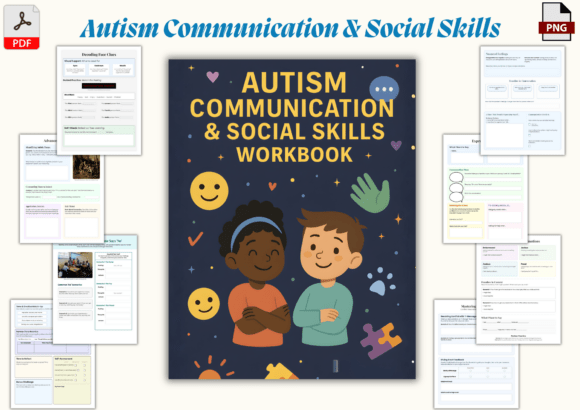
Autism Communication Social Skills
Autism Communication Social Skills aren’t about “fixing” how autistic children interact—they’re about building shared understanding, mutual respect, and practical tools that honor neurodivergent ways of processing, expressing, and connecting. It’s the difference between expecting a child to make eye contact on demand versus helping them recognize when someone is feeling frustrated—and giving them multiple, low-pressure ways to respond. These skills include decoding tone of voice, interpreting facial expressions in context, navigating unspoken social expectations, using scripts for common interactions, and developing self-awareness around emotional regulation and personal boundaries.
Why This Matters—Across Roles and Realities
What makes Autism Communication Social Skills meaningful shifts depending on who’s holding the conversation—and why.
Parents often seek clarity, consistency, and calm. They may prioritize resources that reduce daily friction—like a visual chart for “How do I know if my sibling wants space?” or a script for ordering food at a restaurant. For them, ease of use, emotional safety, and immediate applicability matter most. A workbook that avoids overwhelming layouts or abstract metaphors—and instead offers clear, step-by-step practice with real-life moments—fits seamlessly into bedtime routines or weekend learning time.
Educators and therapists need fidelity and flexibility. They look for evidence-informed structure paired with room for adaptation: Can this worksheet be modified for a nonverbal student? Does it align with AAC goals? Is there space to add individualized goals or track progress across sessions? The Autism Communication Social Skills Workbook supports this by offering clean, print-ready pages with intentional white space, consistent visual language, and layered scaffolding—such as pairing a facial expression chart with guided reflection (“What might this person need right now?”) rather than just labeling emotions.
Support workers and inclusion coordinators often juggle diverse learners across settings—classrooms, after-school programs, community centers. They value portability, durability (via printing), and relevance to group dynamics. Pages like “Reading the Room” or “Understanding Intent Behind Words” help teams move beyond surface behavior (“They walked away”) to supportive interpretation (“They may feel overloaded and need quiet time”). That kind of nuance builds more responsive, less reactive support.
What Makes This Workbook Different—Without Saying “Different”
It’s not about novelty—it’s about fit. Many resources assume one-size-fits-all social rules or rely heavily on neurotypical norms as the benchmark. This workbook starts from a different premise: that communication is relational, contextual, and bidirectional. So it includes tone-of-voice lessons not as “how to sound friendly,” but as “how to match your voice to your message—and notice when others shift theirs.” It treats social scripts not as rigid lines to memorize, but as flexible templates—“Here’s one way to ask for help. Try adapting it with your words.”
The design reflects that intentionality. Calming color palettes, uncluttered layouts, and consistent iconography reduce cognitive load. Worksheets avoid open-ended prompts like “Tell me how you feel”—which can stall or overwhelm—and instead offer concrete options, drawing spaces, or sentence starters. Even the paper size—8.5 x 11 inches—is chosen for accessibility: large enough for visual clarity, standard enough for easy printing and binding.
Practical Use Across Contexts
- At home: A parent uses the “Emotion Decoding” pages during quiet afternoon time—not as a quiz, but as a shared observation game: “Let’s look at these faces together. Which one feels like how you felt when your tower fell?”
- In therapy: A speech-language pathologist pairs the “Social Scripts” section with role-play, then records audio clips of real conversations (with permission) to compare tone, pace, and pauses—making abstract concepts tangible.
- In classrooms: A special educator prints the “Understanding Intent” charts for small-group discussion, linking them to classroom scenarios: “When Maya says ‘I’m fine,’ what else might she mean? How could we check in gently?”
- In social skills groups: Facilitators use the “Confidence & Connection” reflection pages as journaling prompts, then invite optional sharing—not to perform understanding, but to build collective insight.
Choosing What Fits Your Needs
If you’re evaluating whether the Autism Communication Social Skills Workbook meets your goals, consider your priorities:
- Ease of use? It requires no setup—just print, go. No login, no app, no subscription. Ideal for caregivers managing multiple demands or educators without tech access.
- Quality and intentionality? Every page is designed with sensory and cognitive accessibility in mind—not as an afterthought, but as a core constraint guiding layout, font, imagery, and language.
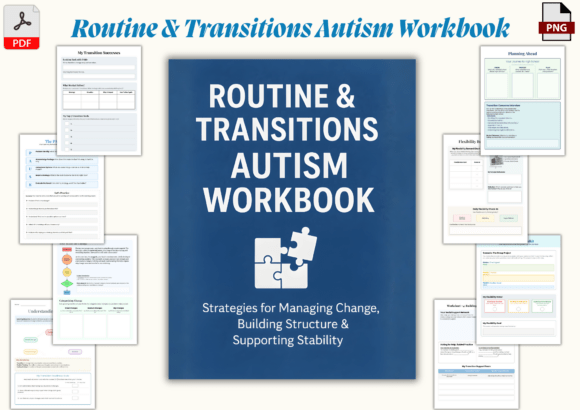
- Flexibility? Because it’s PDF + PNG, you can annotate digitally, project for group work, print single pages, or bind into a personalized booklet. Therapists add stickers; teachers highlight sections; parents tear out favorites for the fridge.
- Long-term usefulness? The focus on foundational skills—like recognizing intent, regulating responses, and building self-trust—means these pages remain relevant across developmental stages, not just one school year or therapy cycle.
It’s not built for speed or scale alone. It’s built for resonance—with autistic children’s experiences, with adults’ desire to support without overstepping, and with the quiet, persistent work of growing connection on shared, respectful ground.
Whether you're a teacher preparing for Monday’s circle time, a therapist designing a new goal, a parent wondering how to talk about big feelings without pressure, or a support worker looking for a reliable, neuro-affirming tool—you don’t need to master everything at once. You just need one clear, compassionate place to begin.