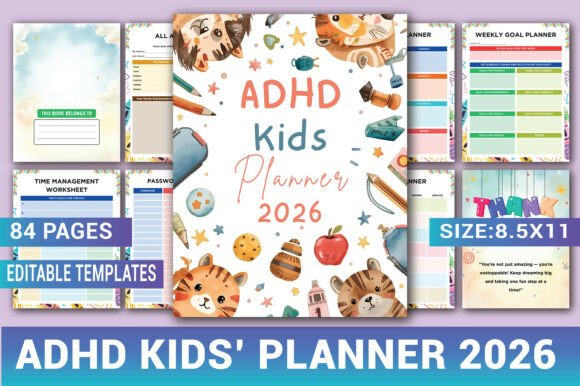
ADHD Kids’ Planner 2026: A Practical Tool for Consistent Structure in Daily Life
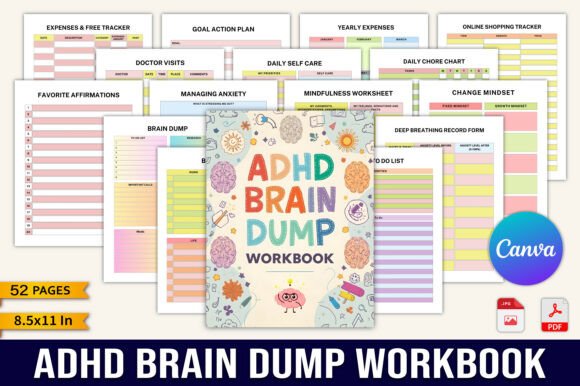
For parents, teachers, and caregivers supporting children with ADHD, consistency isn’t just helpful—it’s foundational. The ADHD Kids’ Planner 2026 is built not as a generic calendar or checklist, but as a scaffolded system that meets neurodivergent learners where they are: in motion, curious, easily distracted, and deeply capable when given the right supports. It fits into real-life workflows—not as an add-on, but as a quiet, reliable anchor across school terms, therapy appointments, family routines, and personal growth goals.
This planner doesn’t assume linear progress or uniform attention spans. Instead, it works *with* how executive function develops over time—offering visual clarity, low-pressure tracking, and repeated reinforcement of agency. That makes it especially valuable for adults managing multiple roles: a teacher coordinating IEP accommodations, a homeschooling parent balancing curriculum and emotional regulation, or a therapist integrating behavioral goals into daily practice.
How It Fits Into Your Existing Workflow
The ADHD Kids’ Planner 2026 integrates most effectively when treated as a living document—not something filled out once and filed away. Its value emerges through repetition and co-use. For example:
- Before school starts: Use the 2026 Calendar Overview and class schedule pages to preview transitions—first day, field trips, testing windows—and pair them with the “Weekly Goals” section to build anticipation, not anxiety.
- Daily at home: Anchor evening routines around the Homework Log and Mood Tracker. These aren’t about perfection—they’re data points. Over time, patterns emerge: energy dips after screen time, focus improves with movement breaks, or certain subjects consistently trigger frustration. That insight informs adjustments—not blame.
- In collaborative settings: Teachers can reference the Lesson Plan and Exam Timetable pages to align classroom pacing with what the child sees at home. When both environments reflect similar language (“Today’s Big 3 Tasks”) and structure (color-coded time blocks), cognitive load drops significantly.
It also complements digital tools without competing with them. If your child uses a tablet-based task manager or a school LMS like Google Classroom, the planner serves as the analog counterpart—where handwriting, color, and physical page-turning support memory encoding and self-monitoring. No syncing required; just parallel use with shared intent.
Design Choices That Support Real-World Use
Every feature in the ADHD Kids’ Planner 2026 reflects intentionality—not decoration. Consider how layout decisions translate to usability:
- Daily, Weekly, Monthly Planners use large, uncluttered spaces with clear visual boundaries. This reduces decision fatigue—no need to choose between five different templates. One consistent format builds familiarity, which lowers resistance over time.
- School Trackers separate logistics (class schedule) from accountability (homework log) and reflection (exam prep notes). That separation matters: it prevents overwhelm and allows adults and kids to engage with one layer at a time.
- Reading Section includes space for doodles alongside book reviews. This honors varied expression—some kids process stories through drawing before writing. The Reading Challenge offers gentle scaffolding, not rigid quotas.
- Wellness & Self-Care Pages avoid clinical language. “Mood Tracker” uses emoji-style faces, not scales. “Gratitude Journal” prompts with concrete examples (“Something that made me smile today…”), making abstraction accessible.
Even small details matter: thick paper resists bleed-through from markers or gel pens, spiral binding lies flat for easy writing, and tabs separate sections without requiring fine motor precision to flip. These aren’t niceties—they’re accessibility features that affect whether a child reaches for the planner—or pushes it aside.
Building Consistency Without Burnout
Consistency with ADHD doesn’t mean doing the same thing every day. It means having a predictable *way to adapt*. The ADHD Kids’ Planner 2026 supports this by building in flexibility:
- The Daily Schedule includes blank “Flex Blocks”—time reserved for unpredictability, not filled in advance. That models healthy boundary-setting and teaches kids that plans are tools, not contracts.
- Activity Exercise Logs track movement without prescribing duration or intensity. A walk, dance break, or trampoline session all count—validating effort over output.
- Food and Health Trackers focus on observation, not judgment. “What did my body feel like after lunch?” matters more than calorie counts. This supports interoceptive awareness—a skill often underdeveloped in ADHD and critical for self-regulation.
For adults, this means less policing and more partnering. You’re not checking off boxes—you’re noticing shifts, asking questions, and adjusting supports. That changes the dynamic from “Did you do it?” to “What worked? What didn’t? How can we tweak it?”
Long-Term Integration: From Tool to Habit
Like any effective system, the ADHD Kids’ Planner 2026 gains power through sustained, low-stakes use—not intensive launch periods. Here’s how to embed it naturally:
- Start with one page per week. Pick the highest-leverage item: maybe the Homework Log during exam season, or the Mood Tracker when emotions feel volatile. Master one before adding another.
- Use it alongside existing rituals. Keep it open next to breakfast cereal, or clip it to a homework station. Physical proximity increases usage more than reminders ever will.
- Review—not revise—weekly. Spend 5 minutes each Sunday flipping back through the week. Not to critique, but to spot patterns: “We used the Reading Log 4 days this week,” or “The Gratitude Journal was skipped when bedtime got late.” Let observations guide next steps.
- Let the child own the tone. They can draw on the Goal Setting pages, paste stickers on the Activity Log, or write affirmations in glitter pen. When the planner feels like *theirs*, engagement follows.
Over months, this builds metacognitive habits—the ability to notice one’s own thinking, energy, and needs. That’s the real outcome: not a perfectly filled planner, but a child who increasingly says, “I know when I need a break,” or “I learn better when I move first.”
Compatibility With Broader Support Systems
The ADHD Kids’ Planner 2026 doesn’t replace professional support—it extends it. Therapists can assign specific tracker pages as between-session practice. Pediatricians may review the Doctor Visit Log and Symptom Tracker to assess medication timing or lifestyle correlations. Occupational therapists might use the Daily Schedule to reinforce time perception work.
It also bridges communication gaps. A note in the “Class Schedule” section—“Ms. Lee lets me stand at the back during math”—can be shared with a new teacher in September. A pattern logged in the Emotion Tracker (“Frustration spikes before lunch on Tues/Thurs”) becomes actionable data during a parent-teacher conference.
Most importantly, it normalizes support. When planning, reflection, and self-care appear side-by-side in bright colors and friendly fonts, they stop feeling like deficits—and start looking like skills worth cultivating.
Ultimately, the ADHD Kids’ Planner 2026 succeeds not because it fixes ADHD, but because it respects it. It assumes competence, accommodates variability, and returns agency—page by page, day by day, year by year.