2026–2027 Christmas Planner KDP: A Practical Guide for Self-Publishers and Designers
Planning for the 2026–2027 holiday season starts earlier than many realize—especially for creators preparing print-on-demand planners for Amazon KDP. The 2026–2027 Christmas Planner KDP is a ready-to-upload interior file designed specifically for authors, designers, and small business owners who want to publish a seasonal planner without building from scratch. Unlike generic holiday journals or broad annual planners, this resource focuses tightly on December 2026 through early January 2027, with structure, spacing, and formatting optimized for Amazon’s print requirements.
What Makes This 2026–2027 Christmas Planner KDP Distinct?
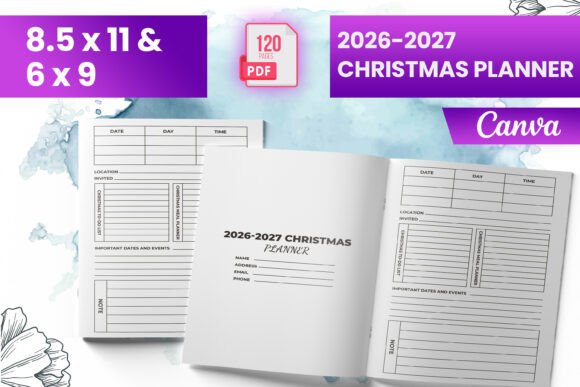
The 2026–2027 Christmas Planner KDP stands out not because it introduces new functionality, but because of its precision in execution and platform alignment. It includes 120 total pages, formatted across standard trim sizes: 6″ × 9″, 8.5″ × 11″, and a less common but increasingly popular 9″ × 12″ option. Each version is bleed-ready—meaning margins and image extensions meet KDP’s strict 0.125″ bleed requirement—and has been tested on Amazon’s previewer and proofing tools to avoid common rejection triggers like misaligned crop marks or low-resolution elements.
It begins with a clean intro page—not decorative filler, but a functional welcome section that sets tone and usage context. Beyond PDF, the package also delivers PNG and JPG files, which serve dual purposes: they allow designers to extract individual pages for custom cover mockups or social media previews, and they support quick visual verification before uploading. That attention to file versatility matters when time is limited and errors are costly.
How It Compares to Other Approaches
Many creators start with blank Canva templates or free Google Docs layouts—but those rarely translate cleanly to KDP. They often lack bleed, use non-print-safe fonts, or include unembedded graphics that shift during conversion. Others rely on pre-made “KDP planner kits” sold on marketplaces; while convenient, many contain outdated specs (e.g., old margin rules), inconsistent page counts, or no testing confirmation. The 2026–2027 Christmas Planner KDP bridges that gap by offering what experienced self-publishers need most: reliability, predictability, and minimal post-download adjustment.
Compared to building a planner in Adobe InDesign or Affinity Publisher, this interior saves hours—especially for those managing multiple seasonal titles. Yet it doesn’t lock users into rigid design. Because it’s delivered as layered, high-res PNGs and JPGs alongside the final PDF, designers retain flexibility to rework headers, swap icons, or adjust color palettes in Canva or other editors before final export. That hybrid approach—structured yet editable—is where this 2026–2027 Christmas Planner KDP finds its niche.
Strengths Worth Noting
- Time efficiency: Upload-ready means skipping troubleshooting around bleed zones, gutter spacing, or font embedding—common pain points for first-time KDP users.
- Format consistency: All three trim sizes share identical layout logic, so content flows naturally regardless of reader preference or regional printing standards.
- Testing transparency: Files were verified using KDP’s online preview tool and soft proofs—not just assumed compatible. That reduces the risk of rejected uploads or costly physical proofs.
- File diversity: Having both PDF and raster assets lets users adapt the interior for promotional visuals, Pinterest pins, or even hybrid digital/print bundles.
Tradeoffs and Realistic Limitations
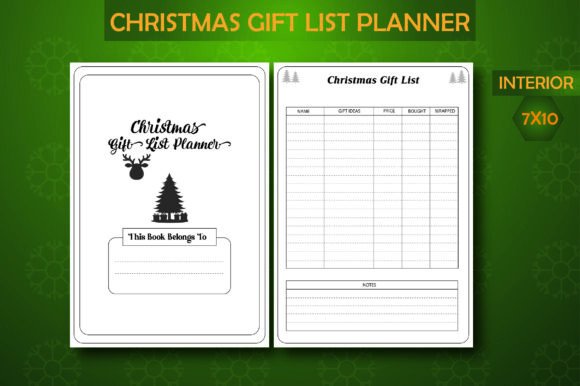
No ready-made interior eliminates all customization work. Users still need to add their own branding—logo placement, copyright text, and back matter (e.g., “About the Author” or “Other Titles”). The interior does not include editable text layers in Canva format, so changing body copy requires working within PDF editing tools or recreating pages from scratch. Likewise, while the 120-page count covers planning phases (gift lists, budget trackers, meal prep, wrapping schedules, post-holiday reflection), it doesn’t extend into broader life-planning categories like habit tracking or goal setting—those would require combining with other resources.
Also worth noting: because it’s built for the 2026–2027 cycle specifically, it’s not reusable year after year without revision. That’s intentional—it avoids the clutter of outdated dates or mismatched holidays (e.g., Thanksgiving falling on different November Thursdays). But it does mean creators must plan ahead if they intend to release updated versions annually.
When This 2026–2027 Christmas Planner KDP Fits Best
This interior works well for creators who:
- Already have a cover design or plan to commission one, and need only a polished, compliant interior;
- Are launching a seasonal product line and want consistency across formats (e.g., pairing this planner with a matching 2026–2027 Advent journal);
- Prefer working in Canva or similar drag-and-drop tools but need assurance that final output meets KDP’s technical bar;
- Are balancing multiple projects and can’t afford to spend days debugging margin issues or resubmitting files.
It’s especially practical for educators, church groups, or small retailers creating branded holiday resources—where speed, clarity, and professional presentation outweigh the need for highly personalized layouts.
When Another Option May Be Better
If your workflow depends heavily on automation—for example, generating personalized gift lists via spreadsheet integrations—then a static PDF interior won’t support dynamic fields. Similarly, if you’re targeting readers who expect extensive digital interactivity (fillable forms, embedded links, or QR-triggered audio), this 2026–2027 Christmas Planner KDP isn’t built for that. Its strength lies in printed usability, not digital functionality.
For creators focused on long-term evergreen products—like a “Christmas Planning Bible” meant to be reused across decades—this date-specific interior may feel too narrow. In those cases, a modular, date-agnostic template with editable year fields might offer more flexibility, even if it requires more upfront setup.
Making an Informed Decision
Choosing the right planner interior involves weighing three factors: your timeline, your design control needs, and your audience’s expectations. If you’re aiming to list before Q3 2026 and want confidence in your file’s KDP readiness, the 2026–2027 Christmas Planner KDP reduces uncertainty. If you’re experimenting with layout styles or testing multiple trim sizes, having all three included saves duplication effort. And if your readers prioritize clean typography, logical progression, and space for handwritten notes over flashy graphics, this interior supports that quietly—without drawing attention to itself.
Realistically, most successful KDP planners succeed not because of novelty, but because of thoughtful execution: consistent spacing, intuitive navigation, and respect for how people actually use paper tools during a busy season. This 2026–2027 Christmas Planner KDP reflects that understanding—not as a shortcut, but as a foundation built on observed constraints and repeated validation.
Final Considerations Before Use
Before uploading, verify your cover matches the selected trim size and includes its own bleed. Double-check that any added text (e.g., disclaimers or contact info) uses KDP-approved fonts and falls within safe margins. While the interior was tested, final output can vary slightly depending on your cover file, metadata choices, and regional printing partner—so ordering a physical proof remains advisable for first-time releases.
Also remember: Amazon’s algorithm favors titles with strong relevance signals. Pairing this interior with a clearly worded title (“2026–2027 Christmas Planner: Gift Lists, Budget Trackers & Holiday Prep Journal”), targeted backend keywords, and authentic customer-facing descriptions will help visibility more than any interior feature alone.