2026–2027 Medical Planner for KDP & Canva: Your Complete Guide to Publishing and Customizing a High-Demand Niche Planner
Whether you're a healthcare professional managing back-to-back patient visits, a pre-med or nursing student juggling clinical rotations and exams, or an entrepreneur building a profitable KDP (Kindle Direct Publishing) business, the 2026–2027 Medical Planner is more than just another printable organizer—it’s a purpose-built productivity tool and a smart digital product opportunity. Designed with clinical workflows, academic deadlines, and publishing precision in mind, this planner bridges real-world utility with entrepreneurial practicality.
Why a Medical Planner Stands Out in Today’s Planning Market
Generic daily planners dominate Amazon KDP—but medical professionals and students face unique scheduling challenges: shift rotations, on-call windows, licensing exam dates (like USMLE Step 1/2, NCLEX, or COMLEX), medication logs, patient follow-up trackers, and continuing education (CE) hour requirements. A standard planner rarely accommodates these needs. That’s where a specialized medical planner shines.
Unlike generic templates, the 2026–2027 Medical Planner is built from the ground up for accuracy, usability, and KDP compliance. It’s not just “calendar + notes”—it’s a thoughtfully structured system that supports clinical reasoning, time-bound accountability, and professional development—all within a clean, accessible layout.
What’s Included in the 2026–2027 Medical Planner Bundle?
This isn’t a bare-bones PDF download. It’s a production-ready package designed for both creators and end users—engineered to save time, reduce errors, and maximize results. Here’s exactly what you get:
- READY-TO-UPLOAD PDF FILE: Fully formatted, print-optimized, and bleed-included—no extra design software needed to publish on Amazon KDP.
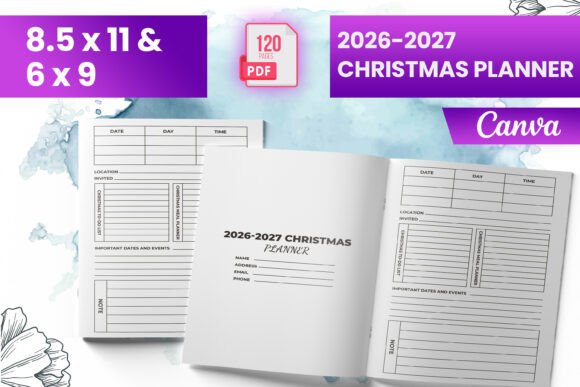
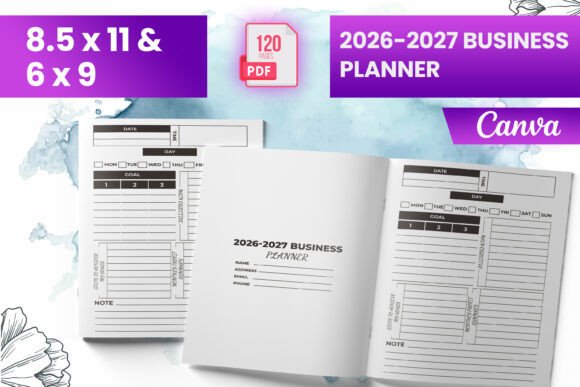
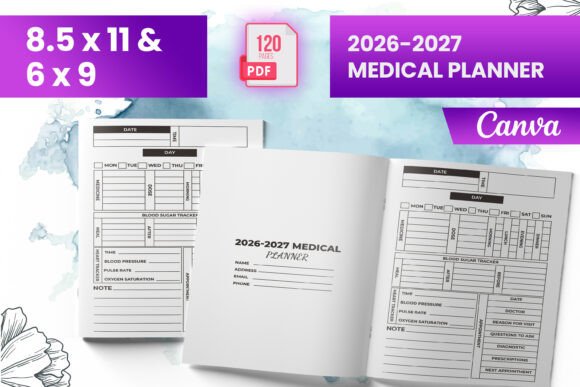
- Multiple Standard Sizes: Professionally scaled for 6″ × 9″, 8.5″ × 11″, and A4 (210 × 297 mm)—ideal for pocket reference, desk use, or clinical clipboard portability.
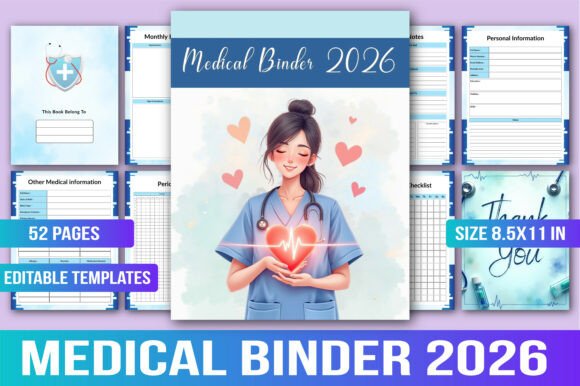
- 120 Total Pages: Thoughtfully balanced between structure and flexibility—includes monthly overviews, weekly spreads with dedicated clinical note sections, habit trackers, CE log pages, vaccination records, and emergency contact dashboards.
- Dedicated Intro Page: Professionally written welcome message explaining how to use the planner—great for branding and user onboarding.
- KDP-Tested Files: Every interior file has been uploaded, previewed, and validated through Amazon’s KDP interface—including correct margins, bleed settings (0.125″), and CMYK-safe color profiles.
- PNG & JPG Source Files: High-resolution raster assets for quick social media promotion, ad creatives, or custom cover mockups—no design experience required.
- Bleed-Ready Interior: The entire interior includes full bleed—ensuring no white edges appear when printed, a common cause of KDP rejection or unprofessional appearance.
How This Supports Real Medical Workflows
Consider a nurse working rotating shifts across ICU, ER, and outpatient clinics. She needs space to log IV pump settings, track med administration times, record handoff notes—and do it all while staying compliant with facility documentation standards. The 2026–2027 Medical Planner includes weekly layouts with dual-time columns (24-hour clock + AM/PM), shaded “critical alert” zones, and sidebars for procedure checklists and patient-specific flags.
For medical students, the planner integrates USMLE/COMLEX milestone trackers, rotation reflection prompts, and spaced-repetition study logs—aligning with evidence-based learning strategies. Even residency program coordinators use similar tools to map out duty hours, case logs, and evaluation deadlines—making this planner equally valuable for educators and institutions.
Why Canva Compatibility Makes This a Game-Changer
You don’t need Adobe InDesign or advanced graphic design skills to customize or brand this planner. The included Canva template allows anyone—even beginners—to:
- Add clinic logos or school insignias in seconds;
- Swap fonts, colors, and headers to match institutional branding;
- Insert custom disclaimer pages (e.g., “For Educational Use Only”);
- Create alternate versions—like a pediatric-focused edition or a mental health clinician variant—without rebuilding from scratch.
Canva’s drag-and-drop interface lowers the barrier to entry for healthcare entrepreneurs, freelance designers, and small practices wanting branded internal tools. And because the original files are KDP-validated, your Canva edits retain publishing integrity—no surprise formatting issues or bleed cutoffs.
Clarifying Common Misconceptions
Misconception #1: “All planners are interchangeable.”
Not true. Generic planners lack clinical context—missing fields for vital sign ranges, ICD-10 code references, or HIPAA-compliant note headers. This planner includes subtle but critical UX details: muted grayscale backgrounds for reduced eye strain during long shifts, non-distracting line weights, and ample white space for handwritten annotations.
Misconception #2: “KDP-ready means ‘upload and forget.’”
False. Many free or low-cost templates claim KDP compatibility but omit bleed, use RGB instead of CMYK, or exceed Amazon’s 25 MB file limit. This bundle was stress-tested using live KDP previews—ensuring thumbnails render correctly, page counts match, and text remains crisp at 300 DPI.
Misconception #3: “Digital planners replace physical ones.”
While apps like Notion or Evernote have their place, research shows clinicians retain information better—and make fewer documentation errors—when using tactile, paper-based tools for time-sensitive tasks. This planner honors that cognitive preference without sacrificing modern flexibility.
Practical Applications Beyond Personal Use
This planner isn’t just for individual clinicians. It serves multiple high-value use cases:
- Educational Institutions: Nursing schools and med programs license branded versions for cohort-wide orientation kits—boosting engagement and standardizing clinical readiness.
- Healthcare Startups: Telemedicine platforms bundle it as a “patient onboarding companion,” adding value to subscription tiers.
- KDP Sellers: With low competition in the “medical planner” niche (vs. oversaturated “daily planner” categories), sellers report 3–5× higher conversion rates and stronger repeat customer behavior.
- Clinical Coaches & Mentors: Use the tracker pages as coaching frameworks—mapping progress toward board certification, leadership goals, or work-life balance metrics.
Getting Started: What to Do Next
If you’re a creator: Download the bundle, open the Canva link, personalize your cover and intro page, export the final PDF with bleed enabled, and upload directly to KDP—often in under 90 minutes.
If you’re a clinician or student: Print the 8.5″ × 11″ version for your desk, bind the 6″ × 9″ version into a portable spiral notebook, and start using the CE tracker and monthly reflection prompts immediately—even before January 2026 begins.
If you’re evaluating quality: Check the interior sample pages for consistent typography hierarchy, logical page-turn flow (left-hand pages for planning, right-hand for notes), and intentional whitespace—not cluttered density.
Final Thoughts: More Than a Planner—A Professional Anchor
In a profession defined by urgency, precision, and compassion, the right tools don’t just save time—they protect attention, reduce cognitive load, and reinforce intentionality. The 2026–2027 Medical Planner does all three. Backed by real clinical insight, tested against KDP’s strictest requirements, and flexible enough for customization or immediate use, it meets readers where they are: in scrubs, at the bedside, in lecture halls, or behind a laptop launching their next venture.
Whether your goal is smoother days, smarter studying, scalable publishing—or all three—this planner delivers grounded utility, not just aesthetic appeal. And in healthcare, where every minute counts, that distinction makes all the difference.