Medical Binder 2026: Your Quiet Partner in Health Clarity
Imagine this: You’re sitting in a specialist’s office, and the doctor asks, “When did your joint pain start worsening? Was it after you switched blood pressure meds—or before?” You pause. You know the answer is somewhere—in a text thread, a sticky note on your fridge, or buried in last year’s pill organizer. But right now? It’s not where you need it.
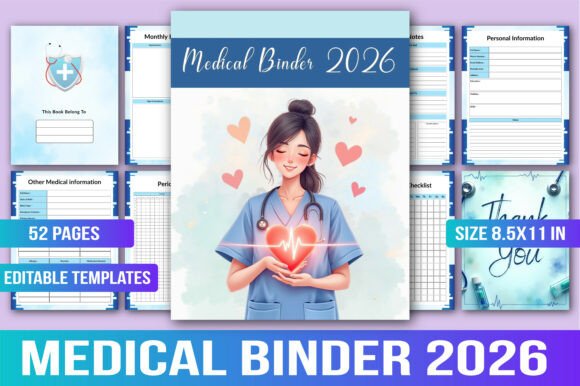
That moment—frustrating, time-sensitive, and quietly stressful—is exactly why the Medical Binder 2026 exists. It’s not just another planner. It’s a thoughtfully assembled, paper-based health command center built for real life: unpredictable appointments, overlapping medications, aging parents, new diagnoses, busy caregiving schedules, and the everyday mental load of managing health across seasons and life stages.
When Life Gets Complicated—and Your Health Records Shouldn’t
The Medical Binder 2026 shines brightest when complexity meets urgency. Think about:
- A working parent coordinating care for a child with asthma and a teen with ADHD: One binder holds inhaler logs, school nurse notes, medication timing charts, and allergy action plans—all updated monthly, not scattered across apps and notebooks.
- A caregiver supporting an aging parent through multiple specialists: Instead of juggling printed lab reports, pharmacy receipts, and scribbled appointment reminders, everything lives in one place—with clear tabs for contacts (page 16), family medical history (pages 20–21), and a quick-reference medical summary (page 22).
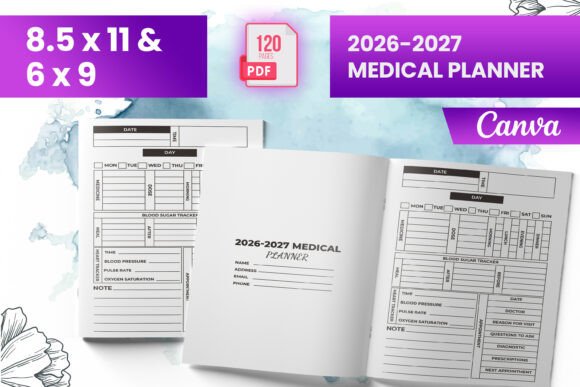
- A young adult newly diagnosed with type 1 diabetes: The 24-hour medication schedule (pages 23–24) isn’t just for pills—it adapts beautifully to insulin dosing, carb counts, glucose readings, and mood or energy notes. No app login required. Just open, write, reflect.
- A college student managing anxiety, seasonal allergies, and birth control: The monthly calendars (pages 3–15) help spot patterns—like increased fatigue during midterms or flare-ups around pollen peaks—while the wellness log section supports gentle self-tracking without judgment or data overload.
It’s also unexpectedly vital during transitions: moving to a new city and switching providers, starting a new job with different insurance, recovering from surgery, or even preparing for a medical mission trip. Having your complete, up-to-date health narrative at hand—organized, legible, and portable—builds confidence in conversations with clinicians. And yes, many doctors genuinely appreciate it.
Who Benefits Most—and How They Use It Differently
The beauty of the Medical Binder 2026 lies in its quiet adaptability. It doesn’t assume your health journey—it meets you where you are:
- Families often use it as a shared reference—not by sharing the binder itself, but by keeping one central copy for household health logistics: vaccination records, pediatrician visit summaries, dental cleaning dates, and over-the-counter remedies used during cold season.
- Seniors lean into the large-print-friendly layouts and intuitive structure. No tech barrier. No battery anxiety. Just clear headings, generous writing space, and emergency contact pages (16–19) that first responders or visiting nurses can scan in seconds.
- Caregivers treat it like a living document—updating medication logs after each pharmacy pickup, jotting down questions before appointments, and flagging symptoms between visits. It reduces mental clutter so they can focus on presence, not paperwork.
- Chronic illness advocates and support group leaders sometimes adopt it as a teaching tool—demonstrating how to organize information before a clinic visit or helping newly diagnosed members build their first health timeline.
What Makes It Work—Beyond the Pages
It’s not just the content—it’s the design philosophy. The Medical Binder 2026 avoids overwhelming users with blank grids or overly clinical language. Instead:
- Monthly calendars prioritize flexibility: Space for appointments, yes—but also for noting sleep quality, energy levels, or even “good days” versus “rest days.” This supports holistic awareness, not just scheduling.
- Medication tracking includes purpose columns: Not just “take metformin”—but “for blood sugar stability after breakfast.” That context helps spot side effects or interactions faster.
- Family medical history pages invite reflection: Rather than just listing conditions, they prompt gentle questions—“Was this diagnosed before age 50?” or “Did lifestyle changes impact progression?”—helping uncover meaningful patterns.
- Emergency info is front-and-center, but not alarmist—just clean, scannable, and ready to hand to EMTs, urgent care staff, or a neighbor who steps in during a crisis.
Things to Consider Before You Begin
Like any tool, the Medical Binder 2026 works best when matched to your rhythm—not forced into it.
If you thrive on digital reminders and instant search, this won’t replace your calendar app—but it *complements* it beautifully. Many users keep the binder on their desk or nightstand and sync key updates weekly. Others prefer to fill it in right after appointments, while details are fresh.
Privacy matters: Store it somewhere accessible but secure—especially if it contains sensitive details. A locked drawer or private shelf works well. And while it’s designed for longevity, consider updating your personal medical summary (page 22) every 3–4 months—or anytime something significant shifts (a new diagnosis, treatment change, or major lifestyle adjustment).
One gentle limitation? It’s intentionally low-tech. There’s no cloud backup, no auto-sync, no push notifications. That’s a strength for some—and a consideration for others. If you rely heavily on shared access (e.g., two caregivers updating simultaneously), plan for manual coordination or designate one person as the primary updater.
More Than Organization—It’s Continuity, Dignity, and Calm
At its core, the Medical Binder 2026 is about continuity—the kind that helps a new rheumatologist understand your 10-year symptom pattern in under five minutes. It’s about dignity—the ability to speak clearly about your own care, backed by evidence you’ve gathered yourself. And it’s about calm—the deep exhale of knowing your most important health details aren’t lost, forgotten, or buried—they’re right there, thoughtfully arranged, waiting to serve you.
Whether you’re navigating a single new prescription, coordinating care for three generations, or simply tired of repeating your story at every intake form—you don’t need perfect health to benefit from better health organization. You just need a place to begin. The Medical Binder 2026 is that place.