Why the 2026 Cleaning Planner Is the Simplest, Most Effective Way to Keep Your Home Clean—Without the Overwhelm
Let’s be honest: cleaning shouldn’t feel like a never-ending to-do list that multiplies every time you turn around. Yet for many people—whether juggling remote work and kids, living solo in a small apartment, or managing a multigenerational household—keeping up with daily tidying, weekly vacuuming, seasonal deep-cleaning, and clutter control often leads to stress, guilt, and burnout. That’s where the 2026 Cleaning Planner steps in—not as another chore, but as your calm, consistent, and customizable system for real-life home maintenance.
What Exactly Is the 2026 Cleaning Planner?
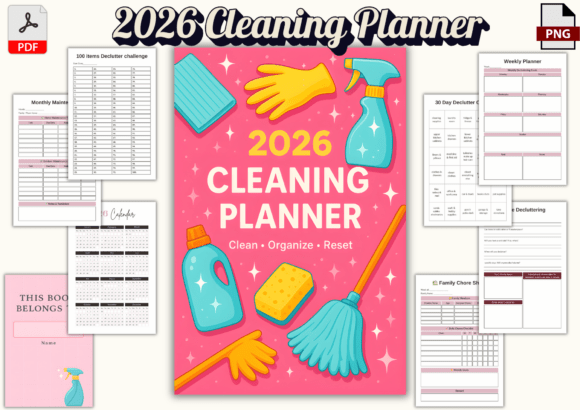
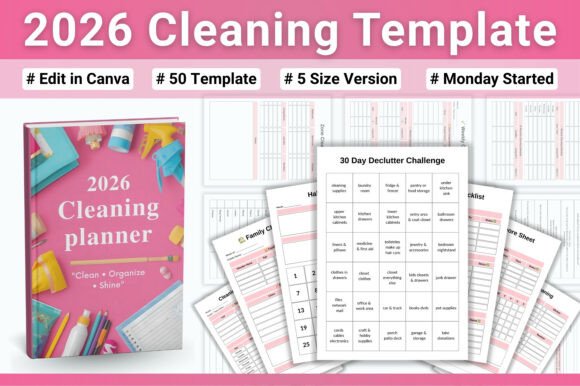
The 2026 Cleaning Planner is a thoughtfully designed, 37-page printable PDF planner created specifically to simplify how we approach cleanliness and organization at home. Unlike generic checklists or digital apps that demand constant notifications and logins, this planner meets you where you are: on paper, in your preferred size (US Letter, A4, A5, or compact 6x9 “half US Letter”), and fully offline-ready.
It’s not just about scrubbing sinks or folding laundry. It’s a holistic tool built around rhythm, responsibility, and realism. Each page serves a purpose—from tracking daily micro-tasks to mapping out quarterly decluttering challenges—and all of it fits into one cohesive, printable system you can revisit, revise, and rely on throughout the year.
Why Paper-Based Planning Still Matters in a Digital World
You might wonder: Why choose a printable planner when so many apps promise automation and reminders? The answer lies in cognitive science and lived experience. Studies show that writing by hand improves memory retention, reduces screen fatigue, and fosters intentionality. When you physically check off a box—or circle a completed task—you activate a sense of accomplishment that digital swipes rarely replicate.
Plus, unlike apps that require setup, syncing, or subscriptions, the 2026 Cleaning Planner is instantly accessible. Print it once and use it anywhere: on your fridge, beside your coffee maker, or tucked into a notebook. No passwords. No updates. Just clarity.
How It Solves Real Household Pain Points
This planner was developed with real frustrations in mind—not theoretical ideals. Here’s how it directly addresses common struggles:
- “I’m overwhelmed by clutter.” → Includes guided decluttering challenges (e.g., “10-Minute Junk Drawer Sprint” or “Closet Reset Week”) with progress trackers—making big tasks feel bite-sized and achievable.
- “I forget what needs cleaning—and when.” → Features layered schedules: daily quick-wins, weekly zones (bathroom, kitchen, living areas), monthly refreshes (baseboards, light fixtures), and seasonal deep-cleans (attic, garage, window screens).
- “Chores fall through the cracks—or get blamed.” → Comes with editable family chore charts, role-based assignments, and accountability trackers—so everyone knows their part without nagging or confusion.
- “I start strong… then fade by February.” → Built-in reflection pages and habit streak trackers help you notice patterns, adjust routines gently, and celebrate consistency—not perfection.
More Than Cleaning: How This Planner Supports Mental Well-Being
Clean spaces don’t just look better—they feel better. Research from environmental psychology links physical clutter to increased cortisol levels, decision fatigue, and reduced focus. A tidy home isn’t about aesthetics alone; it’s about creating a low-friction environment where rest, creativity, and connection can thrive.
The 2026 Cleaning Planner supports this by replacing reactive panic (“Ugh, the bathroom’s a disaster!”) with proactive rhythm (“Every Tuesday: wipe mirrors + restock towels”). That shift—from crisis management to gentle stewardship—reduces background anxiety and frees up mental bandwidth for things that truly matter: family time, hobbies, rest, or simply breathing deeply in your own space.
Who Benefits Most From This Planner?
While anyone can benefit, the planner shines brightest for:
- Busy parents who need visual, shared systems—not vague requests—to involve kids meaningfully in upkeep.
- Solo dwellers seeking structure without overcomplication—especially those transitioning into new living situations or recovering from burnout.
- Neurodivergent individuals (including those with ADHD or autism) who thrive with clear expectations, chunked tasks, and tactile feedback.
- Home organizers and professional cleaners who use it as a client-facing tool to set realistic goals and track progress transparently.
- Students and young adults building foundational life skills—learning how to maintain space respectfully and sustainably.
Practical Tips for Getting the Most Out of Your Planner
Like any tool, its power comes from how you use it—not just owning it. Here’s how to integrate it smoothly:
- Start small. Don’t try to fill every page on Day One. Begin with the Daily Quick-Tidy Checklist and one weekly zone (e.g., “Kitchen Focus Friday”). Build momentum before layering in deeper routines.
- Personalize, don’t perfect. Cross out tasks that don’t apply. Add sticky notes for pet care, plant watering, or smart-home maintenance. This is yours—not a rigid script.
- Review weekly—not just on Sunday. Use the “Weekly Reflection” page to ask: What felt easy? What drained energy? What would make next week smoother? Adjust accordingly.
- Involve others early. Sit down with your partner or teens during a relaxed moment—not mid-mess—to co-create chore assignments. Let them pick tasks they prefer (e.g., “I’ll handle recycling; you take trash”). Ownership grows from choice.
- Reprint key pages as needed. Lost your Monthly Deep-Clean sheet? Printed the wrong size? Since it’s a PDF, you can reprint any page—anytime—without extra cost or delay.
Debunking Common Misconceptions
Before you dismiss printable planners as “old-fashioned” or “too basic,” consider these clarifications:
- ❌ “It’s only for people who love stationery.” → ✅ Not true. You don’t need fancy pens or bullet journals. A pencil and five minutes a day is enough.
- ❌ “This is just for messy people.” → ✅ False. Even highly organized households benefit from scheduled refreshes and shared accountability—especially as seasons change or life circumstances shift (new baby, remote work, aging parents moving in).
- ❌ “Printables aren’t eco-friendly.” → ✅ Actually, printing selectively (e.g., 1–2 pages per week) uses far less paper than disposable notebooks or single-use planners—and many users print on recycled stock or reuse pages digitally via tablet annotation.
Final Thought: Cleaning Isn’t About Perfection—It’s About Peace
The 2026 Cleaning Planner doesn’t promise spotless countertops 24/7. It promises something more valuable: predictability. Knowing what needs doing—and when—and having a kind, flexible roadmap to get there means less mental clutter, fewer last-minute scrambles, and more room for joy in your everyday space.
Whether you’re printing your first copy tonight or already using it to guide your spring reset, remember: consistency beats intensity. Small actions, repeated with intention, create lasting calm. And sometimes, the simplest tools—like a well-designed, beautifully practical planner—make the biggest difference.
Ready to reclaim your time, reduce overwhelm, and build a home that supports—not stresses—your life? The 2026 Cleaning Planner is more than a checklist. It’s your quiet partner in peace.