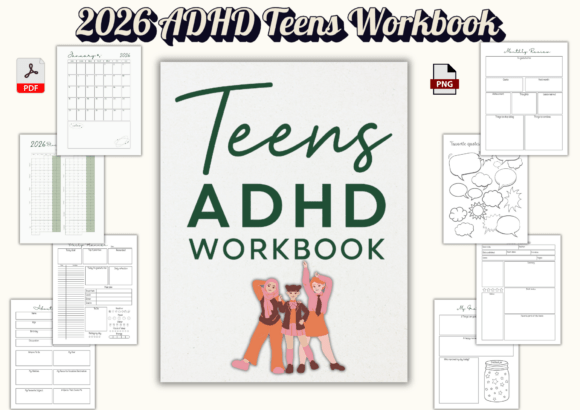
Teens ADHD Workbook
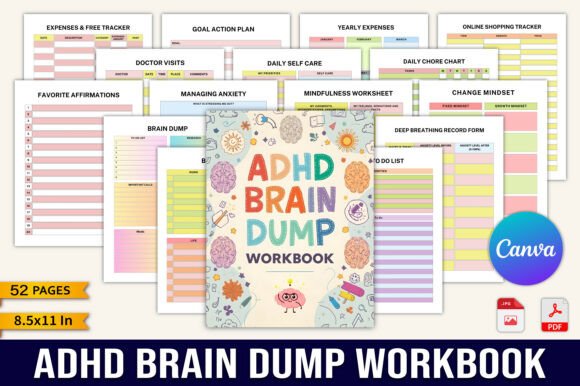
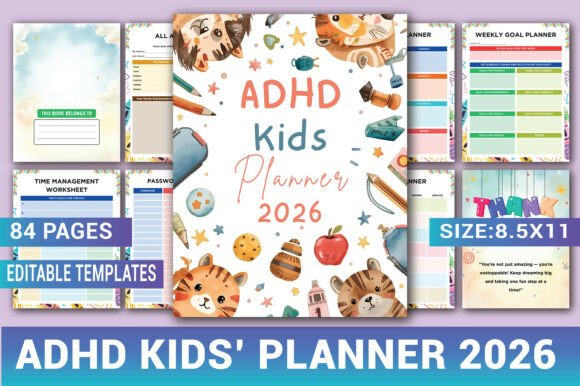
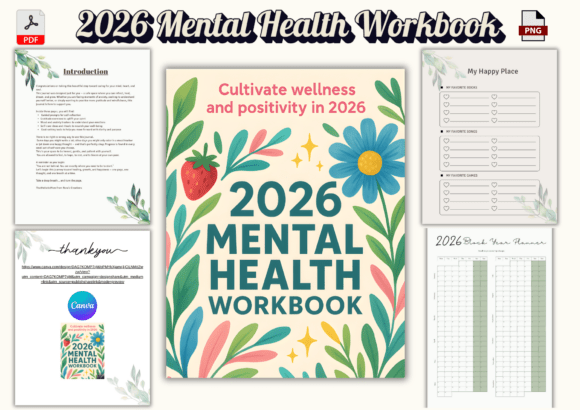
When a teen with ADHD struggles to start homework, loses track of time before a test, or feels constantly misunderstood at school or home, what they often need isn’t more pressure—it’s clarity, calm, and tools designed *for them*. The Teens ADHD Workbook meets that need with quiet intention. It’s not another dense clinical manual or a brightly colored “just try harder” guide. It’s a thoughtfully paced, pastel-toned companion—8.5 × 11 inches, 64 pages, high-resolution PDF and PNG—that supports focus, emotional balance, and self-trust without demanding perfection.
A Workbook Built for How ADHD Brains Actually Work
Most workbooks overwhelm. They pack too much text, assume linear thinking, or use language that reads like a textbook—even for teens. The Teens ADHD Workbook flips that script. Its mint, lavender, and peach palette isn’t just soothing—it’s neurologically considerate. Soft colors reduce visual stress; hand-drawn doodles add warmth without distraction; clean spacing gives the brain room to breathe. There’s no clutter, no jargon, no condescension. Just step-by-step exercises grounded in evidence-based strategies—executive function scaffolding, cognitive behavioral techniques, sensory-aware routines—all translated into teen-friendly language.
This matters deeply for adults supporting teens: educators designing IEP accommodations, therapists guiding emotional regulation sessions, school counselors introducing coping tools, or parents trying to shift from nagging to co-regulating. Because the workbook doesn’t isolate the teen—it invites collaboration. A teacher might assign one “Focus Prep” page before group work. A therapist could use the emotional regulation prompts as conversation starters. A parent might sit beside their teen while filling out the habit tracker—not to monitor, but to model consistency.
Where This Workbook Delivers Real-World Value
The Teens ADHD Workbook shines where many resources fall short: in transferability. Its tools aren’t theoretical—they’re built for school hallways, family dinners, part-time jobs, and late-night text threads. Consider these practical applications:
- School & Learning: The “Routines + Planning Sheets” help students break down long-term projects into tactile steps—no more blank-page paralysis before a history essay. The “Focus Prep” section includes sensory grounding prompts (e.g., “Name 3 things you hear right now”) that can be used discreetly before a quiz or presentation.
- Home & Relationships: The reflection journaling sections avoid vague prompts like “How do you feel?” Instead, they ask, “What helped you stay calm today? What made it harder?” That specificity builds self-awareness—and gives caregivers concrete insight into patterns, not just moods.
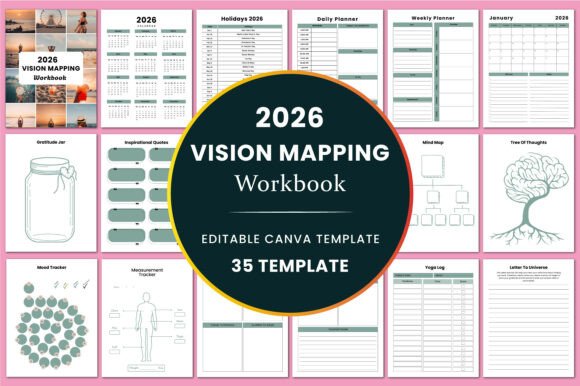
- Creative & Digital Work: Freelancers, educators, and content creators adapting materials for neurodiverse learners use the workbook’s layout as a benchmark. Its clean grid, intentional white space, and consistent iconography demonstrate how to design for attention retention—not just aesthetics. Many have repurposed its habit tracker template into Notion dashboards or printable classroom resources.
- Professional Development: School districts and counseling practices integrate select pages into staff training on ADHD-informed instruction. One district reported a 30% increase in student-led goal-setting after piloting the strength-based activities during advisory periods—because teens weren’t just identifying challenges; they were naming real skills (“I’m great at explaining ideas to friends,” “I notice details others miss”).
Why Usability Is Non-Negotiable—And How This Workbook Gets It Right
For professionals evaluating tools, usability isn’t a bonus—it’s the baseline. A beautifully designed resource fails if it can’t be used consistently. The Teens ADHD Workbook passes that test because it respects three realities:
- Attention is finite—not broken. Pages don’t cram content. Exercises are bite-sized (5–10 minutes max), with clear visual cues telling teens exactly where to start and stop.
- Confidence grows through competence—not praise alone. Strength-based prompts (“What’s one thing you did well this week—even small?”) build neural pathways tied to agency. Over time, teens internalize capability—not just cope with deficits.
- Consistency requires low friction. The US Letter size fits standard binders and printers. High-res PDF ensures crisp printing for schools without premium devices. PNG files let designers drop elements directly into slides or digital handouts—no redesign needed.
Realistic Considerations for Implementation
No tool works universally—and that’s okay. The Teens ADHD Workbook isn’t meant to replace therapy, medication, or systemic support. It’s most effective when paired with relational consistency. For example:
- Therapists find it most useful when assigned between sessions—not as homework, but as shared material. Highlighting one prompt per week keeps engagement sustainable.
- Teachers report best results using it in small groups (4–6 students) rather than whole-class distribution. That allows space for processing and reduces self-consciousness.
- Parents benefit most when they engage alongside their teen—not correcting, but reflecting: “I tried the breathing prompt too. Felt weird at first—did you?” Modeling vulnerability builds trust faster than any worksheet.
Also worth noting: While the pastel aesthetic appeals broadly, some teens prefer bolder visuals. That’s where the high-res PNG files become valuable—you can adapt colors or layer in custom icons without losing quality. It’s flexible by design, not afterthought.
More Than a Tool—A Shift in Perspective
What makes the Teens ADHD Workbook stand out isn’t just its pastel palette or doodle-style art—it’s its foundational stance: that focus, confidence, and emotional balance aren’t outcomes to be forced, but capacities to be cultivated. It assumes competence. It honors neurodiversity without romanticizing struggle. And it gives adults a tangible way to say, “I see you—not the diagnosis, not the behavior, but *you*—and here’s something designed to meet you where you are.”
That’s why educators print extra copies for peer mentors. Why therapists keep it on their coffee table—not the bookshelf. Why creators reference its layout when building digital wellness products. Because when a resource respects attention, affirms identity, and delivers utility without overload, it stops being “just a workbook.” It becomes infrastructure—for learning, for growth, for showing up, fully.