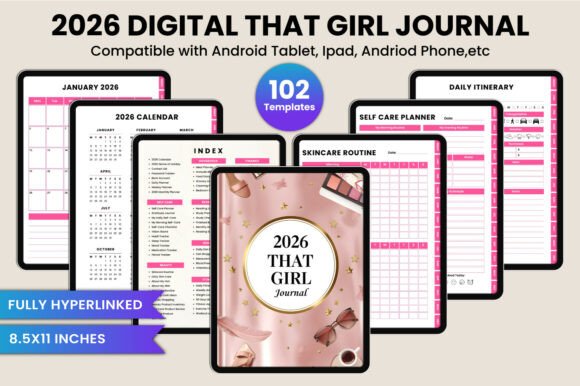
2026 Digital That Girl Journal Canva: A Thoughtfully Designed System for Intentional Living
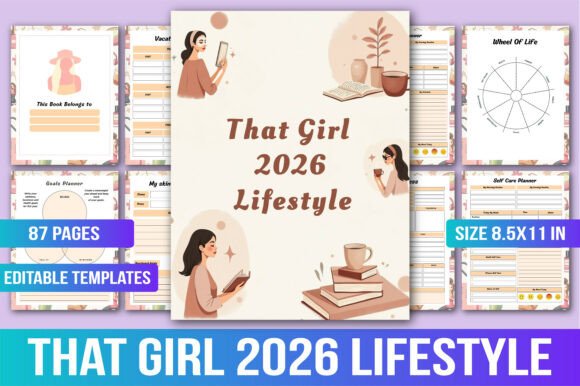
Planning isn’t just about scheduling—it’s about aligning your time, energy, and values. As digital workflows mature and attention becomes increasingly fragmented, people aren’t looking for more tools. They’re seeking coherence: a single, adaptable system that supports their full identity—not just as a professional or student, but as someone who cares about skin health, financial clarity, emotional resilience, and quiet mornings with tea. That’s where the 2026 Digital That Girl Journal Canva stands apart. It’s not another minimalist aesthetic planner. It’s a responsive, editable, lifestyle-integrated framework—built for real life in 2026.
Why “That Girl” Is Evolving—And Why This Journal Fits Right In
The “That Girl” ethos has shifted meaningfully since its early social media iterations. What began as a curated highlight reel of productivity and aesthetics has matured into something quieter, more grounded, and deeply personal. Today’s version prioritizes sustainability over speed, consistency over perfection, and self-knowledge over comparison. Users aren’t chasing an idealized version of themselves—they’re building systems that honor fluctuating energy, evolving goals, and layered responsibilities.
This evolution mirrors broader behavioral shifts: rising demand for digital tools that reduce cognitive load (not add to it), increased awareness of menstrual and mental health tracking as core wellness practices, and growing preference for editable, brand-aligned digital assets—especially among creators, educators, and small business owners who manage multiple platforms and visual identities. The 2026 Digital That Girl Journal Canva responds directly to these needs—not by offering novelty, but by delivering thoughtful integration.
A System Built for How We Actually Work—Not Just How We Wish We Did
Digital journaling has moved beyond static PDFs. Today’s users expect flexibility without friction. That’s why the Canva-editable format matters: you’re not locked into preset fonts or rigid color palettes. If your brand is muted sage and cream, you adjust it in seconds. If you’re using the journal for both freelance project planning and postpartum recovery tracking, you can duplicate and rename sections—no workarounds required.
Compatibility with GoodNotes, Notability, and other annotation apps means seamless handwriting, voice notes, and quick sketching—ideal for brainstorming during a coffee break or jotting down a skincare observation mid-routine. And because it’s structured as a hyper-organized all-in-one system—not a collection of loosely related templates—you avoid the common pitfall of bouncing between five different files for habits, finances, mood, and travel plans.
More Than Tracking: Designing Routines That Stick
Look closely at the self-care and wellness sections—not just *what’s included*, but *how it’s sequenced*. The My Morning Self-Care Routine doesn’t sit in isolation. It’s paired with a Self-Care Planner that prompts reflection on energy levels, boundaries, and capacity—not just checkboxes. The Period Tracker links to the Mood Tracker and Sleep Tracker, encouraging pattern recognition over time, not just day-to-day logging. This isn’t passive data capture; it’s gentle, consistent scaffolding for insight.
Similarly, the beauty and skincare modules go beyond product lists. About My Skin and About My Hair invite descriptive, non-judgmental observation—helping users tune into changes before they become concerns. That kind of reflective framing supports long-term skin health far more effectively than a generic “skincare log.”
Finance, Learning, and Life Logistics—Without the Overwhelm
Many digital planners treat finance as an afterthought—often limited to a single budget page. Here, the Bank Account Log and integrated expense reflection support daily financial awareness without demanding spreadsheet fluency. Paired with the 2026 Monthly Planner, it encourages monthly check-ins that feel manageable—not like tax season prep.
For students, remote learners, and lifelong learners, the Study Planner and Goal Breakdown Pages emphasize process over outcome. You’re prompted to define “what success looks like this week,” not just “what chapter to read.” That subtle shift reduces academic pressure while increasing retention and motivation.
Even travel planning feels intentional: instead of generic itinerary pages, you’ll find space to note local pharmacy locations, hydration reminders for flights, and cultural etiquette notes—practical details that reflect lived experience, not stock imagery.
Design Choices That Reflect Real Priorities
The layout avoids visual clutter without sacrificing depth. Clean typography supports readability on small screens, yet each section retains enough white space to prevent fatigue during longer journaling sessions. Color-coded tabs (subtle, not loud) help navigate quickly—but are fully customizable in Canva if you prefer monochrome or high-contrast modes.
Crucially, there’s no forced positivity. The Gratitude Journal includes optional prompts for “small wins” and “things I released this week”—acknowledging growth as release as well as addition. The Vision Board template guides users to define values first (“What does ‘abundance’ mean *to me*?”), then translate those into tangible images or words—reducing the risk of vague, ungrounded aspirations.
Who Benefits—and How They Use It Differently
- Freelancers & Creators: Use the Contact List and Password Tracker alongside client deadlines in the Weekly Planner. Duplicate the Habit Tracker to monitor pitch follow-ups or content batch days.
- Educators & Coaches: Adapt the Vision Board and Goal Breakdown for student goal-setting workshops—or repurpose the Self-Care Checklist as a classroom wellness resource.
- New Parents & Caregivers: Leverage the Medication Tracker, Period Tracker, and Sleep Tracker side-by-side to identify patterns during major life transitions—without needing three separate apps.
- Students & Early-Career Professionals: Combine the Daily Planner with the Finance Log to build routine around part-time work, loans, and skill-building—all in one place.
Looking Ahead: Why 2026 Needs This Kind of Intentionality
As AI tools handle more transactional tasks—scheduling, summarizing, drafting—the human need for meaning-making grows stronger. The 2026 Digital That Girl Journal Canva doesn’t try to automate reflection. Instead, it creates consistent, low-friction opportunities to pause, connect dots, and choose direction—not just react to urgency.
It reflects a quiet but significant trend: the move from optimization to attunement. Not “How do I fit more in?” but “What truly sustains me—and how do I protect space for it?” That question doesn’t change year to year. But having a tool designed to hold it—flexibly, beautifully, and without judgment—makes all the difference.
Getting Started Is Simpler Than You Think
You don’t need an iPad or stylus to begin. Open the PDF on any device, annotate with free tools like Xodo or Preview, or import into Canva to personalize colors and fonts—even if you’ve never used Canva before. Start with just two pages: the 2026 Full Year Calendar and the Habit Tracker. Notice what feels useful. Skip what doesn’t. Duplicate, rename, delete. Your journal evolves as you do.
In a world pulling us in countless directions, intention isn’t grand—it’s daily. It’s choosing one skincare step that feels good. It’s writing one line of gratitude before checking email. It’s trusting that consistency, not intensity, builds the life you want. The 2026 Digital That Girl Journal Canva won’t transform your year overnight. But it gives you the structure—and the grace—to begin.