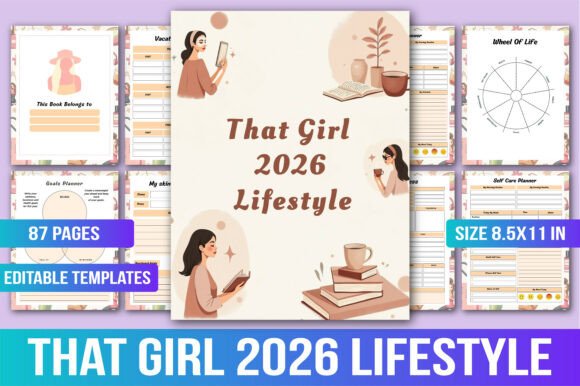
That Girl 2026 Lifestyle: A Practical Evaluation for Intentional Living
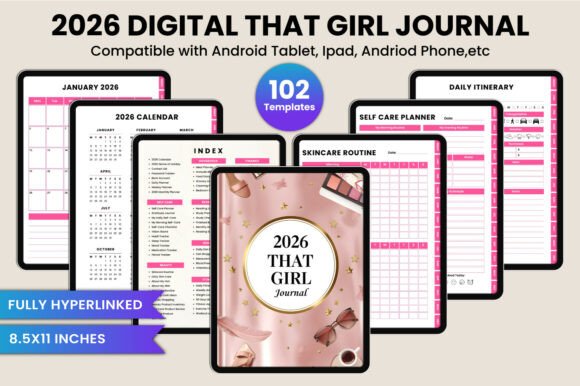
The That Girl 2026 Lifestyle Planner isn’t another trend-driven journal—it’s a structured, grounded tool designed for women who treat self-management as a skill, not a mood. Unlike minimalist bullet journals or overly prescriptive productivity systems, this planner bridges intentionality with realism. It assumes you’re juggling deadlines and caregiving, launching a side project while managing household logistics, or rebuilding routines after burnout. Its value lies not in aesthetic appeal alone, but in how consistently its layout supports daily decision-making without demanding perfection.
What Sets the That Girl 2026 Lifestyle Planner Apart
At its core, the That Girl 2026 Lifestyle Planner functions as an integrated operating system for personal sustainability—not just goal-setting. It avoids compartmentalizing wellness, finance, and productivity into siloed sections. Instead, it links them: a weekly habit tracker sits beside a subscription audit; a meal planner includes macro fields *and* space to note energy levels post-lunch; the finance section asks not only “How much did I spend?” but “What did that expense support—or drain?”
This interdependence reflects real-life behavior. For example, a freelance graphic designer using the planner might notice her “low-mood” days correlate with inconsistent sleep *and* unpaid invoices from two clients. The planner doesn’t diagnose—but it surfaces patterns that manual tracking often misses. Its design encourages correlation over isolation, which aligns with behavioral research showing that sustainable change emerges from recognizing system-wide feedback loops, not isolated willpower.
Usability and Real-World Workflow Integration
Practicality starts with structure. The full 2026 calendar includes monthly overviews with dedicated notes columns—not just for appointments, but for quarterly priorities (e.g., “Q2: Finalize course curriculum,” “Q3: Review insurance coverage”). Weekly spreads balance time-blocking with open reflection space, avoiding the rigidity of hour-by-hour scheduling that many professionals abandon by midweek. Daily pages are intentionally uncluttered: one line for today’s single priority, three lines for gratitude, and modular trackers (water, movement, mood) that can be used selectively—not enforced.
That flexibility matters. A school counselor may use the mindfulness journal daily but skip the finance section until month-end. A small business owner might rely heavily on the subscription tracker and annual budget sheet but only reference the meal planner during high-stress planning cycles. The planner doesn’t penalize partial use. Its pages remain functional whether you fill 30% or 90%—a key differentiator from planners that feel “failed” when left incomplete.
Strengths in Consistency and Long-Term Utility
Consistency is supported through repetition with variation. Habit trackers appear in daily, weekly, and monthly formats—allowing users to zoom in on immediate behaviors (e.g., “Did I meditate today?”) and zoom out to assess trends (“How many weeks did I hit 5+ meditation sessions?”). This scaffolding helps users move beyond binary success/failure thinking. Similarly, the mood tracker uses simple emoji-based scales paired with optional written reflection—lowering the barrier to entry while preserving depth when needed.
The finance section stands out for its operational clarity. Rather than abstract budget categories, it includes concrete tools: a bill tracker with due dates and payment methods, a savings log tied to specific goals (“$1,200 for conference travel”), and a subscription audit that prompts evaluation of value—not just cost. One educator user reported canceling four recurring services after using this section for two months, freeing up $87/month she redirected toward professional development.
Audience Fit: Who Benefits Most—and When
The That Girl 2026 Lifestyle Planner serves professionals and creatives who value structure but resist rigidity—especially those experiencing role overload. It suits individuals transitioning between life stages: returning to work after parental leave, shifting from employee to entrepreneur, or rebuilding routines after illness or relocation. Its strength is in normalization—not inspiration. It assumes fatigue, unpredictability, and competing demands, then offers calibrated tools rather than aspirational templates.
It’s less suited for users seeking deep therapeutic journaling (the reflections are brief and guided, not open-ended), or those who prefer digital-first systems with automation (this is strictly analog). It also assumes basic literacy in self-observation—if tracking mood or energy feels foreign or emotionally taxing, the initial pages may require gentle adaptation or supplemental support.
Design Quality and Physical Execution
Print quality is consistent across versions reviewed: thick, lay-flat binding; paper rated for light pen use (tested successfully with fine-line gel pens and pencil, though fountain pen users should test first); and a matte cover that resists scuffs. Aesthetic cohesion is present without sacrificing function—the color palette is muted (soft terracotta, sage, cream), supporting focus rather than visual distraction. Icons are intuitive and consistently applied: a water droplet for hydration, a scale for macros, a coin stack for budget items. No decorative elements interfere with writing space.
One practical observation: the daily self-care page includes a “non-negotiable” slot—a single line for one boundary or action that must happen today (e.g., “No email after 7 p.m.” or “15-minute walk before dinner”). Users report this small feature has the highest adherence rate—likely because it’s concrete, non-punitive, and ties directly to agency, not achievement.
Realistic Limitations and Considerations
No planner compensates for systemic constraints. If someone works three jobs with rotating shifts, the weekly layout may need adaptation—perhaps using the notes column for shift mapping instead of idealized time blocks. Similarly, the meal planner assumes access to consistent groceries and cooking time; users in food-insecure areas or with limited kitchen access may repurpose those pages for snack prep or hydration goals instead.
The That Girl 2026 Lifestyle Planner also requires initial setup time—roughly 20–30 minutes to populate the annual budget, review subscriptions, and set quarterly intentions. Skipping this step reduces long-term utility. It’s not a “pick up and go” tool, but a “set up once, refine daily” system. That investment pays off most for users already inclined toward reflective practice—even at a basic level.
Final Assessment: A Tool for Sustainable Alignment
The That Girl 2026 Lifestyle Planner earns its place not as a magic solution, but as a reliable interface between intention and action. It performs best when treated as a diagnostic instrument—not a scorecard. Its greatest utility emerges over time: spotting how improved sleep correlates with fewer impulse purchases, or how consistent morning routines reduce decision fatigue during client calls. For professionals, creators, educators, and small business owners managing complex, overlapping responsibilities, it offers quiet leverage. It doesn’t promise transformation. It supports the quieter, more durable work of alignment—day by day, page by page, choice by choice.