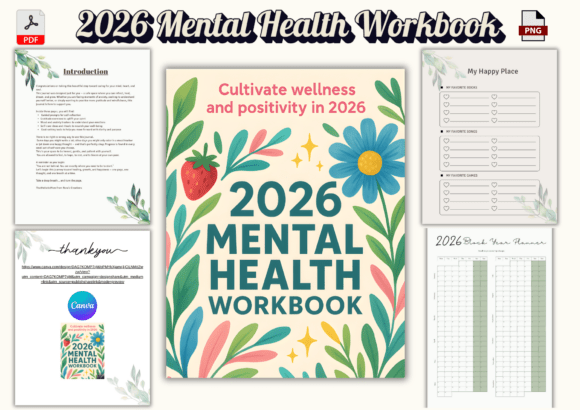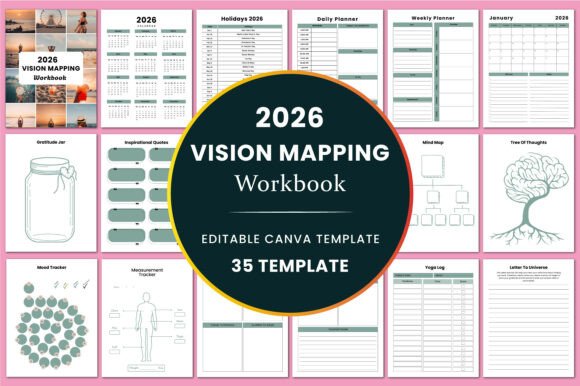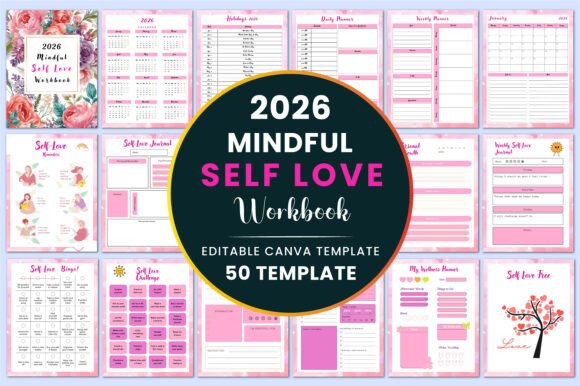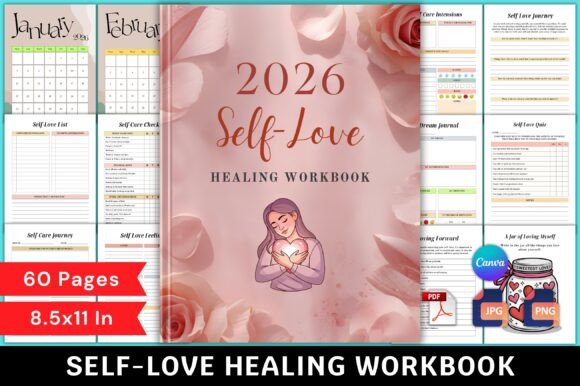
2026 Hobbies Workbook for Women
If you’ve ever stared at a blank calendar in January and thought, “This year I’ll finally learn watercolor… or try pottery… or start that embroidery kit gathering dust on my shelf”—but by March, your hobby energy has fizzled into a to-do list full of groceries and emails—you’re not alone. The 2026 Hobbies Workbook for Women is designed for exactly that moment: not the polished “I’ve got it all figured out” version of yourself, but the curious, slightly overwhelmed, creatively hungry woman who wants real support—not just pretty pages.
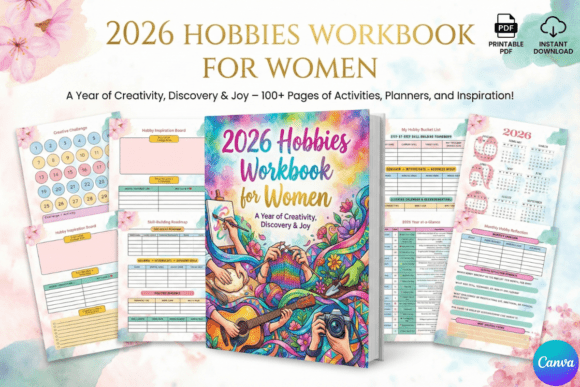
This isn’t another generic planner disguised as inspiration. It’s a 120-page, bleed-format printable PDF built around how women actually explore, sustain, and evolve hobbies—not as side projects, but as meaningful threads in daily life. Whether you're rekindling an old love (hello, childhood piano lessons), testing something totally new (fermentation? digital collage? leather tooling?), or simply craving more presence and play in a screen-saturated world, this workbook meets you where you are.
When Life Gets Real—This Workbook Steps In
Think about your last “I’ll start a hobby” moment. Was it after scrolling past someone’s stunning macramé wall hanging? During a quiet Sunday when your brain felt too loud and you needed tactile calm? Or maybe while helping your teen pick a summer activity—and realizing you hadn’t tried anything new in years?
The 2026 Hobbies Workbook for Women shines in those unscripted, emotionally textured moments:
- After burnout or transition: A teacher on sabbatical uses the Hobby Exploration Tracker and Monthly Hobby Reflection pages to gently test low-stakes creative outlets—no pressure to “become an artist,” just space to notice what lights her up again.
- During parenting shifts: A mom of two toddlers bookmarks 20 minutes every Tuesday using the Year-at-a-Glance and Hobby Budget Planner to explore beginner-friendly fiber arts—buying one skein of yarn instead of a full kit, tracking time spent *and* joy felt.
- In career-adjacent growth: A graphic designer uses the Skill-Building Roadmap and Creative Challenge pages to experiment with analog techniques (linocut, zine-making) that feed her digital work—without needing formal classes or big investments.
- For neurodivergent or ADHD-prone creators: The My Hobbies Wishlist and Visual Dream Space offer low-pressure brainstorming, while the Hobby Bucket List and Notes Page help externalize ideas before they vanish mid-thought.
Who Finds It Especially Helpful—and Why
It’s easy to assume a hobby planner is “just for crafters.” But in practice, the 2026 Hobbies Workbook for Women resonates across very different lives:
- Crafters & makers love the Hobby Budget Planner—not because they’re frugal, but because materials add up fast. Tracking costs alongside time and mood helps them choose projects that truly fit their season of life (e.g., “Can I afford this resin kit *and* the ventilation setup right now?”).
- Beginners lean heavily on the Hobby Inspiration Board and Favorite Links & Resources pages. Instead of Googling “how to start calligraphy” and drowning in 47 YouTube rabbit holes, they curate 3 trusted sources—and return to them.
- Creative professionals use the Creative Quotes & Affirmations and My Hobby Dreams sections to reconnect with intrinsic motivation—not client deadlines or algorithm demands.
- Women rebuilding after loss, illness, or isolation find deep value in the Monthly Hobby Reflection. Writing “What felt grounding this month?” or “When did I lose track of time?” isn’t journaling for perfection—it’s gentle data collection about what restores them.
Real Considerations Before You Begin
This workbook works best when aligned with your actual habits—not aspirational ones. Here’s what thoughtful users tend to notice early on:
- It’s printable—but designed for flexibility: Yes, it’s an 8.5 × 11 PDF with bleed, ideal for printing and binding. But the 12 editable Canva pages mean you can drag-and-drop your favorite quote onto the Visual Dream Space, paste a Pinterest board link into Favorite Links, or type budget notes directly if you prefer digital annotation.
- “Planning” doesn’t mean rigid scheduling: The 2026 Calendar Pages aren’t meant for blocking “Watercolor: 7–8 p.m.” like a dentist appointment. They’re prompts: “What small step could I take this week toward trying watercolor?” That might be watching one tutorial—or buying paper.
- Reflection > completion: You won’t “finish” this workbook. The Hobby Exploration Tracker and Monthly Hobby Reflection gain power over time—not because you fill every box, but because patterns emerge: “I always abandon knitting in February… but return to journaling every autumn.” That insight is gold.
- It assumes kindness, not expertise: No prior experience needed. The Creative Challenge might ask you to “make something using only three colors”—not to produce gallery-ready art. It’s about showing up, not showing off.
Where It Shines—and Where It Asks for Your Partnership
Strengths? Its grounded practicality. The Hobby Budget Planner includes categories like “tools I already own,” “materials I’ll reuse,” and “cost per hour of joy”—shifting focus from expense to value. The Skill-Building Roadmap breaks learning into phases (“Curious → Trying → Practicing → Sharing”) so progress feels visible, even when mastery is distant.
A limitation? It won’t magically create time. What it *does* do is help you spot where hobby energy *already exists*—like the 12 minutes you scroll Instagram daily (what if 4 of those went to sketching?), or the way you light up describing your aunt’s quilting stories (cue the My Hobby Dreams page). It also doesn’t replace community—but it *does* prepare you to show up in one: filling out the Hobby Wishlist makes it easier to say, “I’m looking for a beginner ceramics group—any leads?”
Ultimately, the 2026 Hobbies Workbook for Women treats creativity not as a product to ship or a skill to master, but as a rhythm to tune into—a way to listen closer to what makes your attention soften, your breath deepen, your shoulders drop. It’s for the woman who wants to explore, create, and enjoy—not perfectly, but authentically.