2026 Spiritual Wellness Journal Template
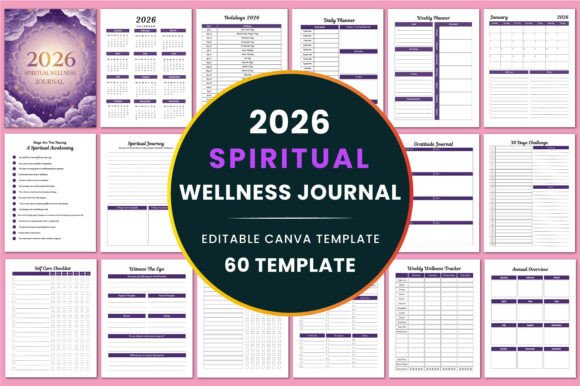
If you’ve ever woken up feeling disconnected—like you’re going through the motions but not truly showing up for your own life—the 2026 Spiritual Wellness Journal Template isn’t just another planner. It’s a quiet, consistent companion designed to help you reclaim presence, deepen self-awareness, and align daily choices with what truly matters to you.
This isn’t about rigid routines or spiritual perfection. It’s about creating gentle, repeatable touchpoints—moments where you pause, reflect, and reconnect—even on days when “spiritual” feels too big or abstract. Whether you're navigating career uncertainty, healing from loss, stepping into parenthood, recovering from burnout, or simply craving more meaning in ordinary moments, this template meets you where you are.
Real-Life Moments Where This Journal Makes a Difference
Consider Maya, 34, a graphic designer who spent years prioritizing client deadlines over her own energy. She started using the Daily Wellness Tracker and Witness The Ego pages during her morning coffee. Within three weeks, she noticed patterns: she’d feel drained after back-to-back Zoom calls, yet kept scheduling them. The journal didn’t fix her workload—but it gave her clarity to renegotiate boundaries with confidence.
Then there’s James, 48, who began journaling after his father’s passing. The Dear My Future Self and How Spiritual Awakening Is Changing Me sections became lifelines—not as answers, but as containers for grief, tenderness, and slow reorientation. He didn’t “get over” the loss; he learned how to carry it with more grace.
And Aisha, 27, used the 30 Days Challenge and Reframe Your Thoughts pages while preparing for her first solo trip abroad. Instead of spiraling into “what ifs,” she practiced naming fears—and then gently questioning their accuracy. That shift didn’t eliminate anxiety, but it made space for curiosity to enter, too.
Who Benefits—and How It Shows Up Differently
- Creatives & Entrepreneurs: Use the Wheel of Life and Goal Action Plan to assess alignment—not just output. Are your projects feeding your soul, or draining it? The Self Care Calendar helps schedule rest like revenue-generating work.
- Healthcare Workers & Educators: With high-empathy roles come emotional residue. Pages like Let Go Of Negative Emotions and Daily Gratitude offer micro-resets between shifts or classes—no extra time required, just 90 seconds with pen and paper.
- New Parents & Caregivers: When “me time” is measured in stolen breaths, the Weekly Wellness Tracker and Sleep Tracker reveal subtle trends: how mood shifts with hydration, or how 10 minutes of guided breathing before bed changes next-morning patience.
- Students & Early-Career Professionals: The Annual Overview and Fitness Goal pages support long-term vision without overwhelm. Pair them with Overcome Autopilot to notice when habits serve growth—or just inertia.
What Makes This Template Work (Without Overwhelming You)
Unlike journals that ask for essays or daily epiphanies, the 2026 Spiritual Wellness Journal Template leans into brevity and repetition. You don’t need to “get it right.” You just need to show up—even if it’s scribbling “tired but grateful for warm socks” in the Daily Gratitude box.
The structure supports rhythm, not rigidity:
- Monthly Planner (Jan–Dec): Helps you spot seasonal energy shifts—maybe creativity peaks in March, while rest is non-negotiable each November. No judgment, just data.
- Reality Vs Illusion: A grounded tool for challenging anxious thoughts (“I’ll never get promoted”) against observable evidence (“I led two successful projects last quarter”).
- Habit Tracker + Mood Tracker: Reveals connections you might miss—like how skipping lunch correlates with afternoon irritability, or how 15 minutes outside lifts focus more than caffeine.
Things to Keep in Mind Before You Begin
This template shines brightest when used flexibly—not as a checklist, but as a compass. If you’re new to reflective practice, start with just one page per day: maybe Gratitude Journal in the morning and Self Care Activity at night. Consistency builds faster than volume.
It’s also not a replacement for professional mental health support. If you’re experiencing persistent hopelessness, dissociation, or emotional numbness, those are signs to reach out to a therapist—not just journal about them. The Overcome Doubt and Witness The Ego pages can complement care, but they’re not substitutes.
And while the 2026 Holidays and 2026 Calendar sections provide helpful context, remember: spiritual wellness isn’t tied to dates. Use them as anchors—not obligations. Missed a day? Flip to tomorrow’s Daily Planner. Skipped February? Start with March’s Monthly Planner. There’s no penalty for re-entry.
Where It Fits Into Broader Wellness Practices
Think of the 2026 Spiritual Wellness Journal Template as the connective tissue between intention and action. It doesn’t replace meditation, movement, or therapy—but it makes those practices more personal and trackable. For example:
- You try a new breathwork app → log how it lands in the Daily Wellness Tracker.
- You commit to weekly nature walks → note insights in Favorite Quotes or Self Care Goals.
- You begin therapy → use Refine Your Thoughts to explore recurring themes between sessions.
Even small rituals gain depth when witnessed on the page. Writing “I am safe” in the Positive Affirmations section feels different than saying it silently—it engages motor memory, slows neural speed, and creates a physical artifact of care.
Why 2026 Is a Meaningful Time to Begin
Calendars mark time—but intention shapes it. Choosing a 2026 Spiritual Wellness Journal Template signals a quiet commitment: I want this year to be more than a sequence of tasks. It’s permission to honor intuition alongside logic, rest alongside productivity, and mystery alongside planning.
Whether you’re drawn to the 30 Days Of Gratitude, the Spiritual Journey prompts, or simply the clean layout of the Weekly Planner, what matters most is that it feels usable—not intimidating, not performative, but quietly supportive. Because spiritual wellness isn’t about reaching some distant peak. It’s about noticing the ground beneath your feet, again and again—and choosing to stand there with kindness.