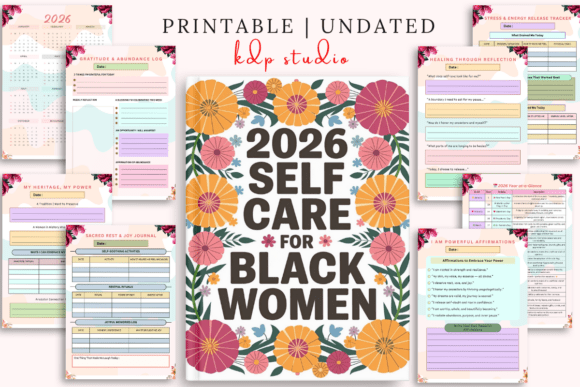
2026 Self Care Journal for Black Women
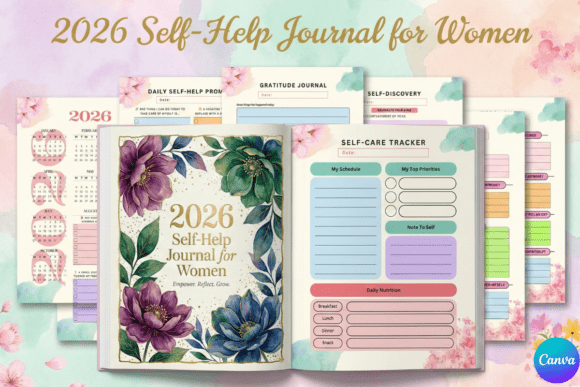
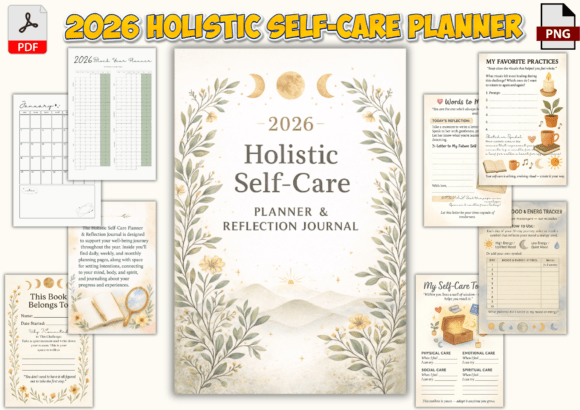
For Black women navigating demanding careers, caregiving roles, creative projects, or community leadership—self-care is rarely spontaneous. It’s intentional. It’s strategic. And it’s deeply personal. The 2026 Self Care Journal for Black Women meets that reality with thoughtful design: a 120-page printable journal built not as a generic planner, but as a grounded, culturally responsive tool for emotional wellness, boundary-setting, and daily reconnection.
A Year-Long Framework That Honors Your Rhythm
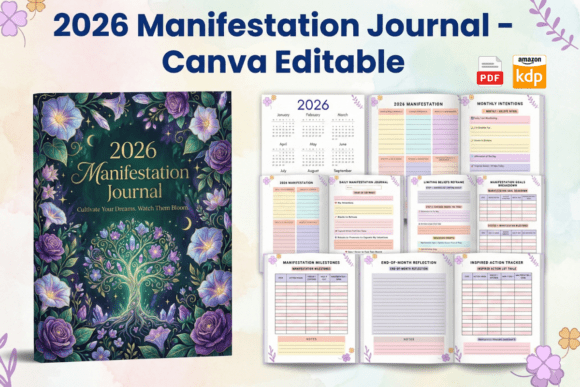
Unlike calendars that prioritize productivity over presence, the 2026 Self Care Journal for Black Women opens with a full-year overview—not just dates, but intention-setting spaces for each month. This isn’t about rigid goal-tracking; it’s about asking: What does rest look like in March, when energy dips after winter? How do I protect my peace during holiday planning in November? Professionals, educators, and entrepreneurs report using this section to align big-picture goals with emotional capacity—scheduling deep work only during high-energy weeks, reserving low-lift days for reflection or joyful movement.
Prompts That Speak Your Language
The guided self-care prompts go beyond surface-level “what made you smile today?” They’re written with cultural fluency—asking about emotional safety in predominantly white spaces, honoring ancestral resilience while naming current stressors, or exploring joy as resistance. A freelance writer shared how the prompt *“When did I last say ‘no’ without apology—and what did that protect?”* helped her renegotiate client contracts. A school counselor used the boundary-focused questions to prepare for difficult parent conversations—shifting from people-pleasing to calm clarity.
Wellness Tracking Without Judgment
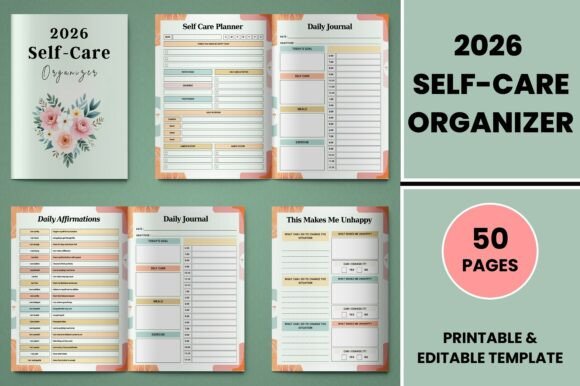
The daily mindfulness tracker avoids prescriptive checkboxes. Instead of “Did you meditate? ☐ Yes ☐ No,” it invites gentle observation: Energy level (1–5), Mood tone (e.g., steady, tender, buzzing), One thing that grounded me today. This approach resonates especially with those who’ve felt alienated by mainstream wellness tools that equate self-care with luxury or excess. Hydration, movement, and quiet moments are tracked—not as metrics to optimize, but as data points to understand your body’s signals over time. Small business owners note it helps them spot burnout patterns before they escalate into missed deadlines or strained team dynamics.
Affirmations That Anchor, Not Perform
The affirmations aren’t vague declarations. They’re rooted in specificity: *“My rest is sacred, not negotiable,” “I trust my intuition—even when it contradicts external expectations,” “My Black joy is expansive, ordinary, and enough.”* These aren’t meant for quick recitation. Many users write them by hand on sticky notes, read them aloud before meetings, or revisit them during moments of self-doubt. An educator told us she reads one affirmation aloud to her students each Monday—modeling self-worth while reinforcing classroom culture.
Reflection Pages Designed for Real Life
Daily reflection pages offer clean, uncluttered space—not rigid templates. Some days, that means three bullet points. Other days, it’s a stream-of-consciousness paragraph or a sketch. The structure supports mental clarity without demanding perfection. For creators and content marketers, this space doubles as a low-stakes idea incubator: noticing recurring themes in frustration or inspiration often sparks new projects or reframes old ones. One blogger discovered a pattern of exhaustion every Thursday—leading her to shift her newsletter schedule and reclaim Friday mornings for rest instead of catch-up.
Weekly Planning That Prioritizes Restoration
The weekly self-care planner moves beyond to-do lists. It asks you to name: one emotional reset (e.g., unplugging for 90 minutes), one joyful routine (dancing while cooking, calling a sister-friend), and one nourishing ritual (herbal tea + no screens, lighting a candle while journaling). This is where theory becomes practice. A nurse practitioner uses her “joyful routine” slot to schedule short walks in nature—something she’d long postponed as “non-essential.” Within six weeks, she reported fewer afternoon fatigue crashes and improved focus during patient visits.
Gratitude That Includes Complexity
The Gratitude Joy Log doesn’t ask you to bypass hardship. It invites celebration of micro-moments: laughter during a tense Zoom call, the comfort of a favorite playlist, the relief of canceling plans without guilt. This subtle reframing helps build emotional resilience—not by denying difficulty, but by widening the lens to include what’s still true and sustaining. Freelancers and remote workers especially appreciate how this log counters isolation, gently reminding them of connection and continuity even on solitary days.
Who Benefits Most—and When It Might Not Fit
This journal serves Black women who value structure but reject rigidity—who want support, not surveillance. It’s especially helpful for those returning to self-care after years of caretaking others, rebuilding after transition (career shift, relocation, loss), or seeking consistency amid fluctuating energy levels. It’s less suited for users who prefer digital-only tools (though it’s printable and PDF-based) or those looking for clinical mental health support—this complements therapy but doesn’t replace it. If your needs center heavily on habit formation or habit stacking, pairing it with a dedicated habit tracker may add value.
Practical Integration, Not Perfection
You don’t need to fill every page. Many users start with just two elements: the monthly intention and one daily tracker column. Others use it digitally—importing the PDF into note-taking apps with stylus support. The “with-bleed” design ensures clean printing, whether you’re binding it at home or using a local print shop. Because it’s undated (2026-specific but not day-dated), you can begin anytime—even mid-year—and still benefit from the seasonal flow of prompts and reflections.
More Than a Tool—A Quiet Act of Belonging
Using the 2026 Self Care Journal for Black Women is a small, consistent way to affirm: Your well-being matters. Your pace is valid. Your identity is honored here. It won’t eliminate systemic stressors—but it creates a reliable container where healing, empowerment, and nourishment aren’t abstract ideals. They’re practiced, page by page, week by week. That kind of grounded presence doesn’t just change how you feel on a given Tuesday. It reshapes how you show up—for your work, your people, and yourself.