Helping Children Thrive Through Sensory Awareness: Why the Sensory Regulation Calm Workbook Is a Game-Changer
Every child experiences the world through their senses — but not every child processes those sensations in the same way. For some kids, the hum of fluorescent lights feels like static in their ears. A scratchy sweater might spark tears or meltdowns. Crowded hallways can feel overwhelming, not just busy. These aren’t “behaviour problems” — they’re signals. Signals that the nervous system is overloaded, under-stimulated, or simply asking for support.
This is where the Sensory Regulation Calm Workbook steps in — not as a quick fix, but as a compassionate, practical, and deeply respectful tool designed *with* neurodivergent children in mind, not *for* them as a problem to solve.
A Neuro-Affirming Approach to Self-Regulation
Traditional behaviour charts or rigid calm-down corners often miss the root cause: sensory input. The Sensory Regulation Calm Workbook starts from a different place — one grounded in neuroscience and empathy. It assumes that children want to feel safe, connected, and capable. It recognises that regulation isn’t about compliance — it’s about connection, awareness, and choice.
That’s why every page is built on neuro-affirming principles: no shaming language, no forced eye contact prompts, no “just try harder” messaging. Instead, you’ll find soft, soothing colours, clear visuals, and open-ended questions that invite reflection — not correction. Children aren’t asked to suppress their reactions; they’re invited to understand them.
What Makes This Workbook Different — And Why It Works
There are plenty of emotion charts and breathing cards out there. What sets the Sensory Regulation Calm Workbook apart is its integrated, layered design — one that bridges sensory input, emotional response, and actionable strategy — all in a format that meets kids where they are.
Visual Learning That Sticks
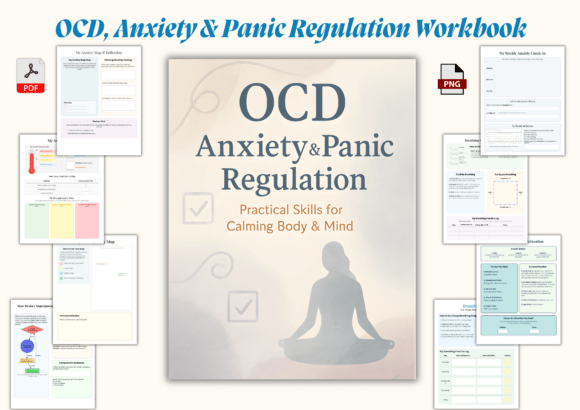
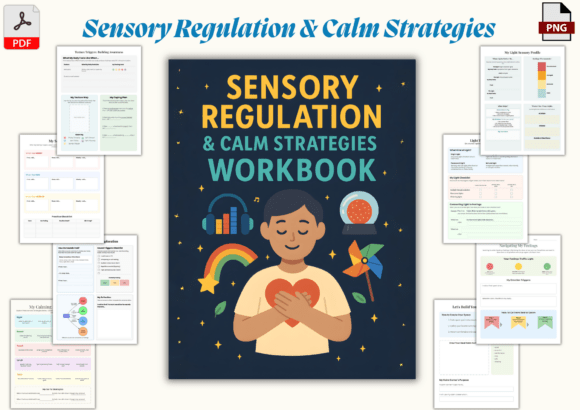
Kids don’t always process verbal instructions well — especially when they’re dysregulated. That’s why this workbook leans heavily into visual supports. From the Emotional Traffic-Light System (green = calm, yellow = noticing big feelings, red = needing support) to the Visual Sensory Profiles, children learn to map their inner world using images, symbols, and colour. One 7-year-old used the traffic-light chart during morning circle to quietly hold up a yellow card — signalling to her teacher she needed a movement break before math. No meltdown. No redirection. Just clarity.
From Overload to Insight — With Worksheets That Invite Curiosity
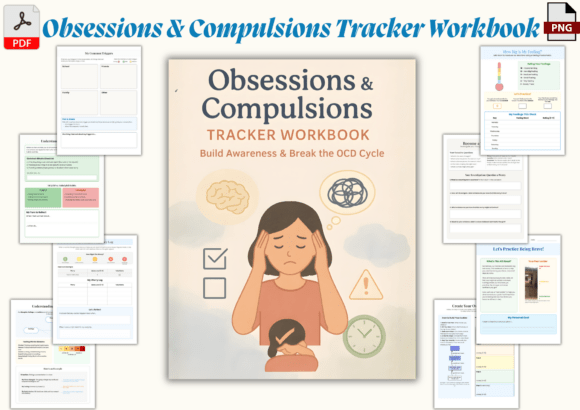
The Sensory Triggers Worksheets don’t ask, “What bothers you?” They ask, “What does your body notice when the fire alarm goes off? Does your heart race? Do your ears hurt? Do you want to hide?” That subtle shift — from judgment to curiosity — changes everything. Children begin to see themselves as observers of their own experience, not victims of it.
Over time, patterns emerge. A 9-year-old with ADHD noticed his “red moments” often followed lunch — not because he was defiant, but because the cafeteria noise + food textures + post-lunch energy dip created a perfect storm. With that insight, he co-created a plan: headphones, a chewy, and five minutes in the quiet corner before returning to class.
Building Real-Life Skills — Not Just Worksheets
This isn’t busywork. Every activity in the Sensory Regulation Calm Workbook connects directly to daily life:
- Breathing exercises & body scans are paired with simple illustrations — no abstract metaphors. Kids trace breath paths, colour in “calm zones” on body outlines, and practice noticing tension before it escalates.
- Fidget tool preferences guide children to test, compare, and choose what truly helps — not what looks cool or fits a stereotype. One child discovered smooth river stones worked better than pop-its for focus during writing tasks. Another preferred deep pressure hugs over any tool at all — and that’s honoured, too.
- Build-Your-Own Calm Corner turns theory into environment. Children sketch layouts, label zones (“cozy spot,” “movement zone,” “quiet tools”), and even decide lighting and sound options. It becomes *their* space — not a punishment corner, but a resource they help design.
Flexible Enough for Any Setting — Consistent Enough to Build Trust
Whether you’re a classroom teacher juggling 25 students, a speech-language pathologist supporting regulation alongside communication goals, a homeschool parent seeking gentle structure, or a support worker helping a teen build autonomy — the Sensory Regulation Calm Workbook adapts without losing its core intention.
Its high-resolution PDF and individual PNG files mean you can print single pages for a child’s binder, project a breathing guide on an interactive whiteboard, or import visuals into AAC devices. You’re not locked into one format — and neither is the child.
In schools, educators use the Personalised Calming Plan template during IEP or 504 planning meetings — turning vague goals like “reduce meltdowns” into concrete, observable actions: “When Maya notices her hands shaking (yellow signal), she will use her weighted lap pad and count backward from 10.” That specificity makes support consistent across adults and settings.
What Kids Actually Learn — Beyond the Pages
The Sensory Regulation Calm Workbook doesn’t just teach strategies — it builds identity. Children walk away knowing:
- Their senses matter — and differences aren’t deficits.
- Big feelings have physical clues — and those clues are useful information, not something to be ignored.
- They get to choose — which tools work, when to pause, how to ask for help.
- Regulation is a skill — like riding a bike or reading — and it gets stronger with practice, not perfection.
One parent shared how her 6-year-old started saying, “My ears are full,” instead of screaming when the vacuum came out. That phrase — born from completing the Sensory Triggers Worksheet — became a shared language. It changed how the whole family responded. No more “stop being dramatic.” Just, “Let’s grab your noise-reducing headphones and watch from the hallway.”
Practical Considerations Before You Begin
If you’re thinking about bringing the Sensory Regulation Calm Workbook into your routine, keep these real-world notes in mind:
- Go slow. Don’t rush through all 80+ pages. Pick one section — maybe the Emotional Traffic-Light System — and spend a week living with it. Observe what resonates.
- Co-create, don’t assign. Let the child colour their own sensory profile. Let them pick which breathing exercise feels most doable. Ownership increases engagement — and effectiveness.
- It’s not one-size-fits-all. Some kids love filling in worksheets. Others prefer talking through prompts while you scribe. That’s fine. The workbook is a scaffold — not a script.
- Adults need regulation too. The best outcomes happen when caregivers also reflect on their own sensory needs and responses. Try the body scan yourself. Notice what calms *you*. That awareness becomes contagious.
More Than a Resource — A Shift in Perspective
The Sensory Regulation Calm Workbook does more than fill a gap in therapeutic tools. It quietly challenges outdated assumptions about behaviour, attention, and readiness to learn. It says: Your child isn’t broken. Their nervous system is communicating. Let’s listen — together.
And in doing so, it gives children something rare and vital: the language, tools, and permission to belong — exactly as they are.