Obsessions Compulsions Tracker Workbook: A Practical Tool for Real OCD Awareness
If you’ve ever felt stuck in the loop of intrusive thoughts followed by urgent, exhausting rituals—or watched a loved one struggle with the same cycle—you know how disorienting OCD can feel. The Obsessions Compulsions Tracker Workbook isn’t another generic journal or vague self-help template. It’s a clinically grounded, printable resource designed to bring clarity, consistency, and compassion to daily tracking—whether you're navigating recovery on your own, supporting a teen, or integrating tools into therapy or school-based counseling.
What This Workbook Actually Does (and Doesn’t Do)
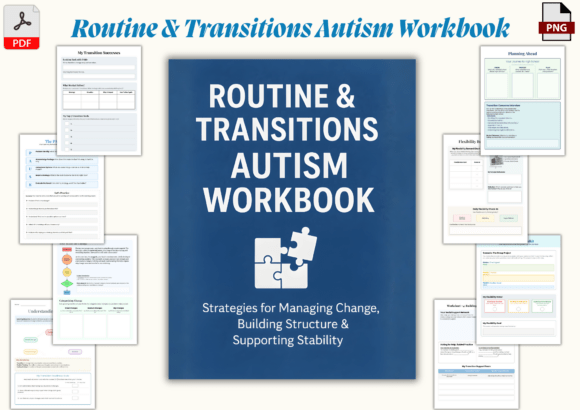
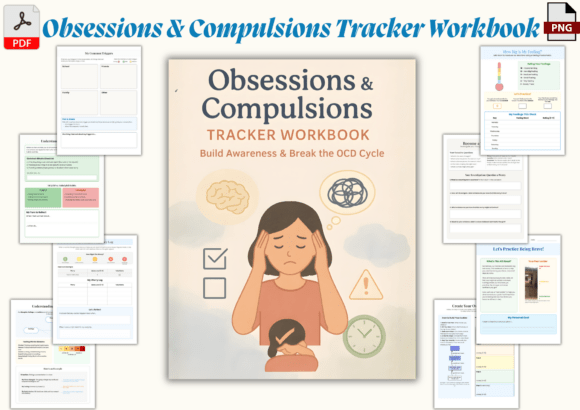
This 8.5 x 11-inch PDF/PNG workbook meets people where they are: not as “broken” or “needing fixing,” but as learners building awareness step by step. Its strength lies in structure—not rigidity. With gentle pastel illustrations and clean spacing, it reduces visual overwhelm while offering concrete sections: obsession logs with nonjudgmental language prompts, compulsion-relief cycle charts, trigger analysis grids, and ERP exposure trackers that honor progress without demanding perfection.
It doesn’t promise overnight change. It doesn’t replace licensed therapy—but it does support evidence-based approaches like Exposure and Response Prevention (ERP) by making patterns visible. That visibility is where real shifts begin: noticing when an obsession spikes *before* the urge to wash, check, or mentally rehearse takes over; spotting how avoidance temporarily eases anxiety but reinforces the loop long-term.
Common Missteps—and How They Undermine Progress
Mistake #1: Printing without checking file compatibility first. Some users download the PDF, open it in a basic viewer, and assume formatting will hold—only to find text cut off, images misaligned, or checkboxes unfillable. Since this workbook includes interactive elements (like fillable fields in the PDF version), opening it in Adobe Acrobat Reader—not preview apps or browsers—is essential for full functionality. PNG files are ideal for printing or digital annotation in apps like GoodNotes, but won’t support typing unless layered correctly. Always verify which format suits your workflow before printing a dozen pages.
Mistake #2: Using it only during high-distress moments. Tracking feels most urgent when anxiety peaks—but that’s also when executive function dips. Relying solely on memory or rushed entries after a panic spike leads to incomplete data, skipped reflections, and missed early-warning signals. Better approach: Set a consistent 3-minute window each morning or evening—even if nothing “big” happened. Note subtle shifts: a fleeting worry about contamination, a pause before touching a doorknob, a mental review of yesterday’s conversation. These micro-observations build the pattern recognition that fuels ERP planning.
Mistake #3: Treating reflection prompts as homework to finish, not invitations to notice. Phrases like “What emotion showed up *before* the thought?” or “What did my body feel right then?” aren’t meant to be answered perfectly. They’re cues to slow down. One user reported skipping these sections for weeks—until she tried answering just *one* question per day, using voice notes instead of writing. That small pivot made the process sustainable and revealed how often physical tension preceded her obsessive loops.
What to Check Before You Print or Download
- File type alignment: Need editable fields? Choose the PDF version and open it in Adobe Acrobat Reader. Prefer handwriting or stylus use? The PNG works well in note-taking apps—but confirm your device supports layering or annotation.
- Print settings: Select “Actual Size” (not “Fit” or “Shrink”) to preserve spacing and checkbox proportions. Test one page first—especially if using thicker paper or a home printer with alignment quirks.
- Usage context: Are you using this solo, with a therapist, or in a classroom? The workbook includes therapist-friendly prompts and school-counselor adaptations—but if you’re assigning it to students, consider whether digital access (via tablet) or printed copies better suit privacy needs and attention spans.
- Emotional readiness: No tool replaces safety planning. If tracking triggers intense shame or hopelessness, pause and consult a clinician. The workbook includes success check-ins and celebration milestones precisely to counterbalance difficulty—but it assumes baseline emotional regulation support is in place.
Why Layout and Design Matter More Than You Think
Many free OCD trackers overload pages with dense text, tiny fonts, or clinical jargon (“cognitive distortion identification matrix”). That adds friction—not insight. The Obsessions Compulsions Tracker Workbook uses intentional whitespace, soft color accents, and intuitive flow: obsession → trigger → physical/emotional response → compulsion → relief → aftermath. That sequence mirrors how OCD actually operates neurologically, making it easier to spot breaks in the chain.
One educator shared how switching from a bullet-point list to this visual cycle chart helped her middle-school students name feelings they’d previously called “weird” or “bad.” Another adult user noted that the inclusion of “motivation-building prompts”—like “What’s one small reason I want to try this today?”—helped her re-engage after two weeks of skipped entries. These aren’t gimmicks. They’re design choices rooted in behavioral activation principles.
A Smarter Way to Start—Without Overcommitting
You don’t need to fill every page. You don’t need to master ERP before opening it. Start with just the Worry Log for three days. Or use the Trigger Analysis Chart to map one recurring situation—like entering a public restroom or receiving an ambiguous text. Small, consistent engagement builds neural familiarity faster than sporadic, intense effort.
And remember: progress isn’t linear. A “successful” week might mean recognizing an obsession earlier than usual—even if the compulsion still followed. That awareness is data. That data informs next steps. That’s how this workbook moves beyond tracking into meaningful change.
Whether you're a freelancer managing anxiety around deadlines, a parent supporting a child through ERP, or a counselor seeking accessible tools for diverse learners—the Obsessions Compulsions Tracker Workbook offers structure without sterility, clarity without pressure, and quiet encouragement in every illustrated margin.