Kids Science Nature Basics for Kids
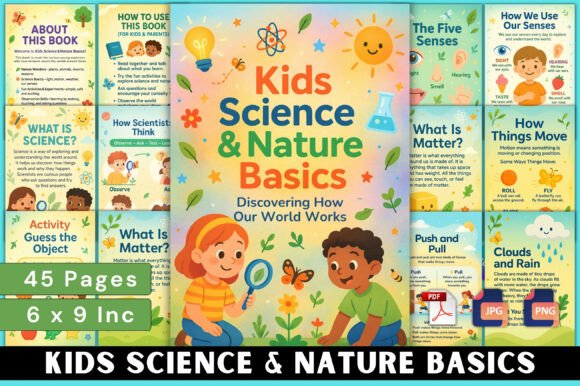
If you're a parent, teacher, or caregiver looking for a gentle, joyful way to introduce science and nature to children ages 4–8, Kids Science Nature Basics for Kids is more than just another picture book—it’s a thoughtfully designed learning companion. Its strength lies in how it bridges curiosity with concrete experience: each concept—from the states of matter to plant growth—is paired with a hands-on mini-activity, clear illustrations, and language that respects a child’s developing attention and vocabulary. What makes it stand out isn’t flashiness, but fidelity: it meets young learners where they are, using their five senses as the first tools of scientific thinking.
Common Missteps When Choosing or Using This Book
Many well-intentioned adults pick up Kids Science Nature Basics for Kids expecting immediate classroom-ready lesson plans—or assume its simplicity means it lacks depth. Neither is true. The most frequent misstep? Treating it like a workbook to be completed page-by-page, rather than a springboard for real-world observation and conversation. For example, the “Be a Little Scientist” activity invites children to observe everyday objects closely—but if an adult rushes through it, skipping the pause for questions (“What do you notice?” “What changed when you touched it?”), the opportunity to build observational skills slips away.
Another overlooked detail is the intentional pacing built into the book’s structure. Each section—light and shadows, weather, habitats, life cycles—introduces one core idea at a time, then reinforces it with illustration, explanation, and activity. Readers sometimes try to “cover more” by adding external facts or complex terminology (e.g., explaining photon behavior during the flashlight shadow activity). That undermines the book’s design: clarity before complexity. Young children learn best when concepts are anchored in sensory experience first—and abstraction comes later.
Why These Choices Matter for Real Learning
When adults skip the tactile parts—like the “Rain Jar experiment” or “Plant a Seed activity”—they miss how Kids Science Nature Basics for Kids uses doing to deepen understanding. Science isn’t just about knowing; it’s about testing, comparing, and wondering. A child who watches ice melt in a cup while reading about solids and liquids builds neural connections far stronger than one who only hears the words “solid,” “liquid,” and “gas.” Without that physical anchor, vocabulary stays isolated—and fades quickly.
Likewise, misunderstanding the role of the “Guess the Object” touch game can reduce it to a guessing game instead of a deliberate exercise in sensory discrimination. The goal isn’t to name the object correctly—it’s to describe texture, temperature, weight, and shape. If adults jump to answers too soon, they unintentionally teach children that speed matters more than description. That quietly erodes scientific habits: careful noticing, descriptive language, and evidence-based reasoning.
What to Check Before You Use or Recommend It
- Match the child’s current engagement—not just age. A highly verbal 5-year-old may thrive with the “Butterfly Life Cycle” pages, while a tactile 7-year-old might need extra time with the “Rolling Object Test.” Let interest guide pace, not the calendar.
- Scan for material readiness. The “Rain Jar experiment” requires a jar, water, shaving cream, and blue food coloring. Don’t assume supplies are on hand—check ahead. Having everything ready preserves momentum and keeps focus on cause-and-effect, not logistics.
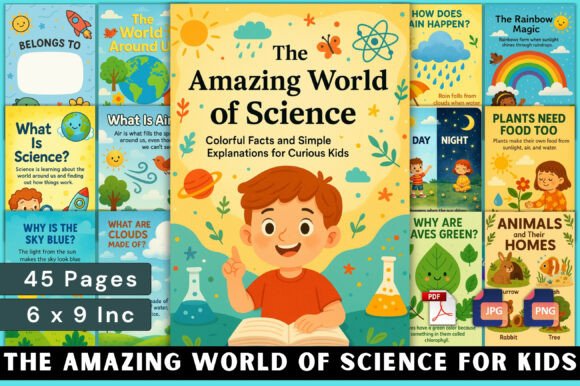
- Notice how illustrations support meaning. The cloud diagrams aren’t decorative—they visually distinguish cumulus from stratus shapes. Take 10 seconds to point and name together. Those moments build visual literacy, which underpins later science reading.
- Look for the “This Book Belongs To” page—and use it. It’s easy to overlook, but personalizing it helps children develop ownership and responsibility. That small act supports executive function development, especially for kids who benefit from clear routines and identity cues.
Better Ways to Bring the Book to Life
Instead of asking, “What’s the answer?” during activities, try, “What did your eyes/ears/hands tell you?” That shift keeps attention on process over product. During the “Flashlight shadow activity,” invite children to move their hand slowly—then fast—and ask, “How did the shadow change? Why do you think that happened?” You’re not expected to explain light waves—you’re modeling how to wonder aloud.
Use the “Match the Animal” habitat activity as a bridge to local exploration. After pairing a camel with the desert, take a walk and ask, “What animals live *here*? What do they eat? Where do they sleep?” That grounds abstract categories in lived experience. Similarly, the “Parts of a Plant” spread gains power when followed by planting actual seeds—even in a repurposed yogurt cup. Growth takes days, not minutes. That wait teaches patience, observation, and the reality of biological time.
And don’t underestimate the value of repetition. Children return to favorite pages not because they’ve “mastered” them, but because each rereading reveals something new—a detail in the illustration, a nuance in the wording, a connection to something they saw outside. Let them linger. Let them point. Let them narrate the bee’s honey-making steps back to you—even if it’s not quite textbook-accurate yet. Accuracy grows from engagement, not pressure.
A Final Practical Note
If you’re evaluating Kids Science Nature Basics for Kids alongside other early science resources, look beyond cover appeal. Flip to the “Melting Ice experiment” page: Does the instruction say *“Watch what happens”*—or *“Write down your hypothesis”*? The former aligns with developmental readiness; the latter often reflects adult assumptions, not child-centered design. Also check whether explanations avoid jargon without oversimplifying—e.g., “Shadows happen when light can’t pass through something” is clearer and more accurate for this age than “an absence of light.”
This book works best when treated as a collaborator—not a curriculum. It doesn’t replace outdoor time, garden visits, or backyard cloud-watching. Instead, it gives language, structure, and shared reference points to make those experiences richer and more meaningful. When used with intention, Kids Science Nature Basics for Kids doesn’t just teach science. It nurtures the quiet, steady habit of paying attention—the very foundation of lifelong learning.